


.svg)
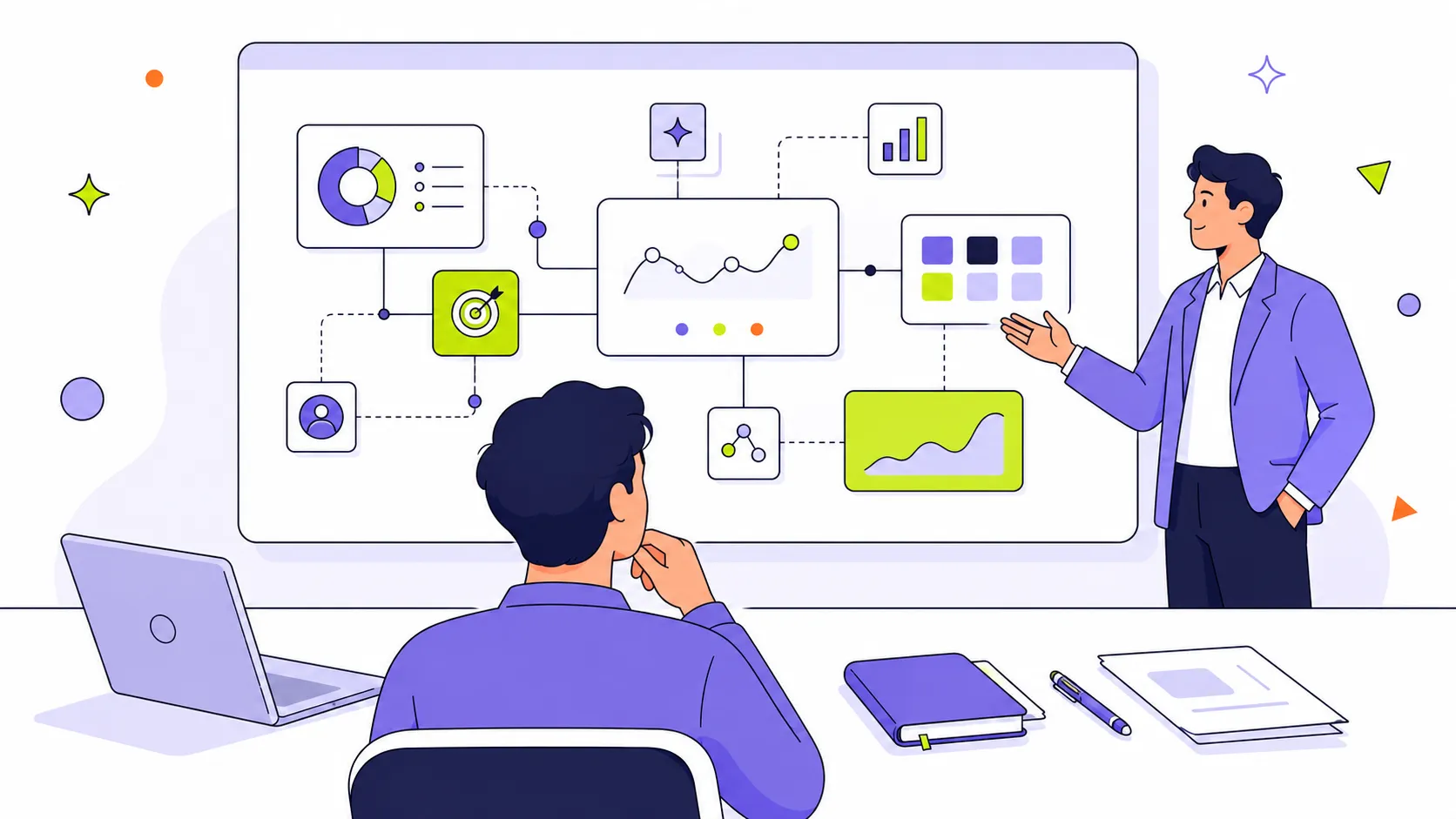
A B2B SaaS company crosses 3 crore ARR, closes a Series A, and something uncomfortable becomes visible. The pitch deck the CEO built in the first month is still the sharpest asset in the company. The website has fallen behind it. The onboarding feels older than the pitch. The demo flow does not match the promise. For a brief window in the early days, the founder was the best designer in the business, and no vendor since has matched that clarity.
This is the point where business design stops being a nice-to-have and starts being the difference between the next round and the next plateau.
The short answer
Business design for SaaS and B2B covers six connected practices. Positioning strategy, brand identity, product experience, website and digital experience, sales enablement design, and integrated marketing systems. The right partner delivers these as one engagement. The wrong approach stitches them together from separate vendors and produces a company that reads like five different companies to the same customer.
Which of the six a specific company needs depends on stage. What stays constant is that they cannot be treated as unrelated projects.
What business design and business model actually mean
Business design is a discipline that applies design thinking to business challenges. It brings a business perspective to business strategy, business model, and customer experience, ensuring business viability alongside customer desirability and treating them as one connected system instead of separate departmental problems.
Business designers work at the intersection of business strategy, design thinking, and product design. Where a management consultancy focuses on business logic and financial projections, and a design agency focuses on visual outputs, business designers often work in cross-functional teams to answer harder questions, which helps drive innovation and surface better ideas from different perspectives.
- How should the business model evolve as the market shifts
- Where does the total addressable market actually sit, and which segments are worth building for
- What customer experience does the end user need for the company to build a genuine competitive advantage
- What business tools and value propositions will hold across different industries and market share segments
- Which parts of the business are ready for digital transformation and which are not
For SaaS and B2B companies, the practical value shows up in the decisions this approach informs. What to price. What to build next. What to say on the homepage. What to remove from the product. What business impact each of those decisions is designed to produce. Business design brings the same rigour to those questions that a good CFO brings to financial planning, but with the end user's experience at the centre instead of the balance sheet.
How to hire business design services for a SaaS or B2B company
Hiring business design services for SaaS or B2B requires a different lens than hiring a branding agency or a management consultancy. The right business design services combine positioning strategy, brand identity, product experience, website design, and integrated marketing systems into one connected engagement. A SaaS or B2B company evaluating business design services should look for a partner that treats brand, product, and business model as one problem, not three.
The best business design services for SaaS companies come from partners who understand the product is the brand, and the brand has to live inside the product. For B2B services companies, the best business design partners understand that pitch materials, sales collateral, and account-based marketing systems are just as important as the marketing website. A partner that only handles one context, or treats both as fundamentally the same, is unlikely to produce work that scales.
Business design services in India today range widely in scope and price, and the wrong hire is expensive to unwind. A SaaS or B2B company shopping for business design services should shortlist three to five partners, run capability reviews on all six of the practices below, and prioritise partners who can show measurable business impact from past engagements. The signal to look for is not portfolio polish but portfolio depth. Partners who have shipped positioning work that survived market contact, product design that scaled with the company, and marketing systems the client team could actually run without the agency in the room.
Why the six services are non-negotiable at Series A and beyond
At pre-seed and seed, most SaaS and B2B companies get by with founder-designed assets and a Framer or Webflow template. That works until it doesn't.
The Series A moment reveals what has been building for eighteen months. What worked a decade ago can become outdated fast as markets and technology move. Sales cycles that take too long because the positioning is soft. Demo request quality that keeps dropping because the website attracts the wrong buyer. Product onboarding that leaks users in the first ten minutes. Pitch decks the sales team is quietly rebuilding on their own laptops because the master version stopped feeling accurate.
None of these is a design problem in isolation. Together they are a business design problem, because the connective tissue between brand and product and sales and marketing was never actually built, and those issues show up across many business situations, not just design handoff problems.
The six services, in the order companies usually need them
Positioning strategy
Positioning is the first and highest-leverage business design service, because every subsequent decision inherits from it.
What positioning work actually covers:
Category positioning.
- Which market the company competes in and the broader business context shaping what portion of it belongs to them
- Named category, defined boundary, alternatives explicitly acknowledged
Buyer positioning.
- Who specifically buys and why they choose this option
- ICP definition, buyer persona depth, decision-committee mapping for B2B sales, and research into potential customers
Value positioning.
- What outcome the product delivers that no alternative can match, grounded in human needs
- Outcome-based value propositions, not feature lists
The engagement with Bootlabs started here. The company had built strong technical infrastructure and needed positioning that could carry them from Indian market to global expansion. The full Bootlabs case study is here. Once the positioning was locked, identity, design system, and website all followed with the same coherence.
Brand identity that flexes across audiences
SaaS and B2B brands rarely talk to a single audience. There is the economic buyer signing the contract, the technical evaluator vetting the product, and the daily user who lives inside the software. An identity system built for only one of them creates friction with the other two.
A robust identity system includes:
- Visual language. Logo, type, colour, layout, photography direction
- Designed to hold weight in enterprise pitches and startup contexts equally
- Motion identity. How the brand moves in product, in ads, on the web
- Increasingly essential because most SaaS interfaces are alive, not static
- Voice and tone system. How the brand sounds in marketing, in product, and in customer support
- Different registers for different audiences, one recognisable personality across all of them
Product experience design
The most under-invested layer in most SaaS branding work. Marketing sites look premium. Product interfaces often look like they came from a different company. Business design closes this gap by designing brand into the product itself, not just around it, so the customer experience feels continuous from the first ad to the tenth month of use, with customer centricity guiding those decisions.
Product experience work covers:
- UI and UX systems. Component libraries, interaction patterns, layout systems
- The brand living inside the software, not just on the marketing page
- Onboarding experience. The first ten minutes that decide activation
- Copy, visuals, and interaction design working as one system
- In-product messaging. Empty states, notifications, feature announcements. A product team may launch a Minimum Viable Product (MVP) to validate assumptions with real users before scaling broader experience work.
- The brand voice showing up in the moments the end user actually interacts with
Website and digital experience
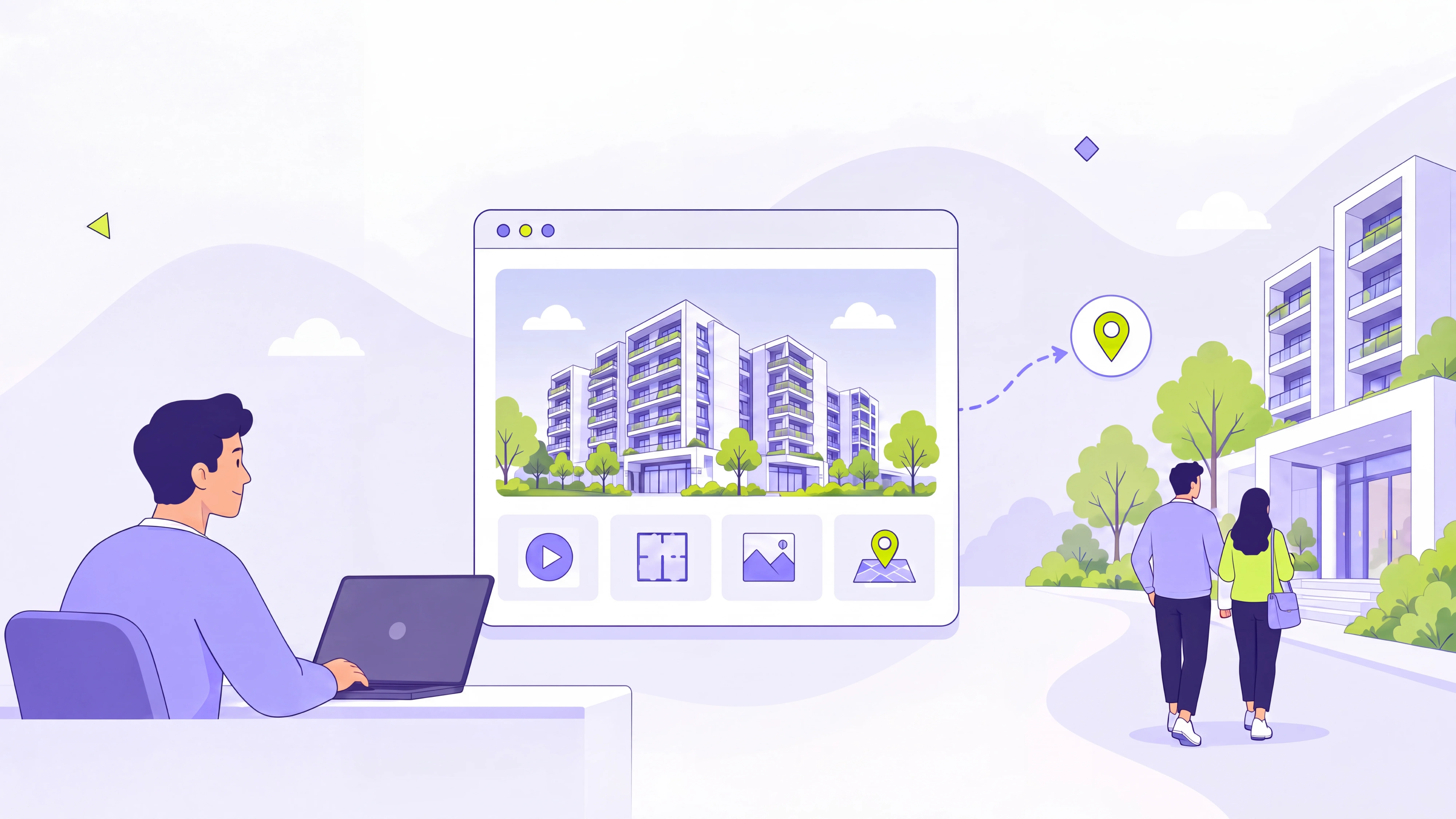
For SaaS and B2B, the website is the highest-volume salesperson in the company. It runs continuously, speaks to more people across the business world than any human on the team, and is the primary reason a demo gets booked or ignored.
A conversion-focused SaaS or B2B website needs:
- Position-led hero section. What the product is, who it is for, and the outcome, in one screen
- Written for the buyer, not the founder
- Product pages built like sales pages. Not feature catalogues that require scrolling patience
- Every section justifying its scroll depth
- Trust systems. Customer logos, testimonials, case studies, security signals, because e-commerce and SaaS buyers alike look for signals that reduce perceived risk
- Designed into the page structure, not bolted on at the end
The engagement with Chargnex is a useful reference for what happens when the full stack is designed together. The company needed a global EV charging brand and platform built from the ground up. Brand identity, business design, app design, and the consumer research to inform all of it. The Chargnex case study is here. The website and the product were designed inside the same conversation, which is why they feel like one company instead of a brand website leading to a different product.
Sales enablement design
The most invisible business design service and often the one with the highest business impact. B2B sales teams, along with business leaders in key sales conversations and workshops, live inside decks, one-pagers, proposal templates, and pitch materials. When these are on-brand and thoughtfully designed, close rates lift. When they are not, sales teams quietly rebuild them in PowerPoint, and every deal ends up with a slightly different version of the company on screen.
Sales enablement work includes:
- Master pitch deck. Fully designed, on-brand, editable by non-designers
- The version sales will actually use, not the version marketing wishes they would
- One-pagers and battlecards. Category-specific, buyer-specific, use-case-specific
- Quick to produce, consistent to look at across the portfolio
- Proposal templates. Modular sections sales can assemble per opportunity, which makes sense because each deal has different stakeholders and decision logic
- Custom by client, on-brand by default
Integrated marketing systems
The final layer, and the one that determines whether business design keeps compounding or slowly decays after launch. A serious partner does not just design the launch assets. They design the system that will produce future assets for the next three years without the design team in the room every time.
This includes:
- Content system. Blog templates, thought leadership frameworks, case study formats
- Marketing team ships on-brand content without a designer bottleneck
- Ad and campaign templates. Performance-ready assets built for each channel's constraints
- LinkedIn, Meta, Google, all designed for their specific behaviour
- Email and lifecycle design. Onboarding sequences, nurture flows, customer success communications
- The brand carrying through the entire customer relationship, not stopping at the first sale
How the business design process and design thinking work
A typical business design process for a SaaS or B2B engagement moves through six phases that coordinate the various facets of the engagement. Discovery, strategy, brand, product, launch, and evolution.
- Discovery covers research with internal stakeholders, competitor analysis, customer interviews, and mapping the total addressable market against current buyer behaviour
- Strategy locks positioning, business logic, business goals, and the customer centric hypothesis the engagement will build against, with a clear focus on alignment and cost structure
- Brand ships the identity system, voice, and design system that hold everything downstream together
- Product applies the brand and positioning inside the software, focusing on the moments that shape the end user's understanding of value
- Launch covers the website, marketing systems, and sales enablement built to move the market opportunity into actual revenue, while also testing price points in market-facing assets and offers
- Evolution is the retainer phase, where the business design team keeps the system healthy as the company grows, new business ideas emerge, and the product expands, using signals and metrics to check whether the company is on the right track
Companies that treat business design as a one-time project usually end up rebuilding parts of it within eighteen months. Companies that treat it as an ongoing practice generally see compounding returns.
The four categories buyers actually evaluate
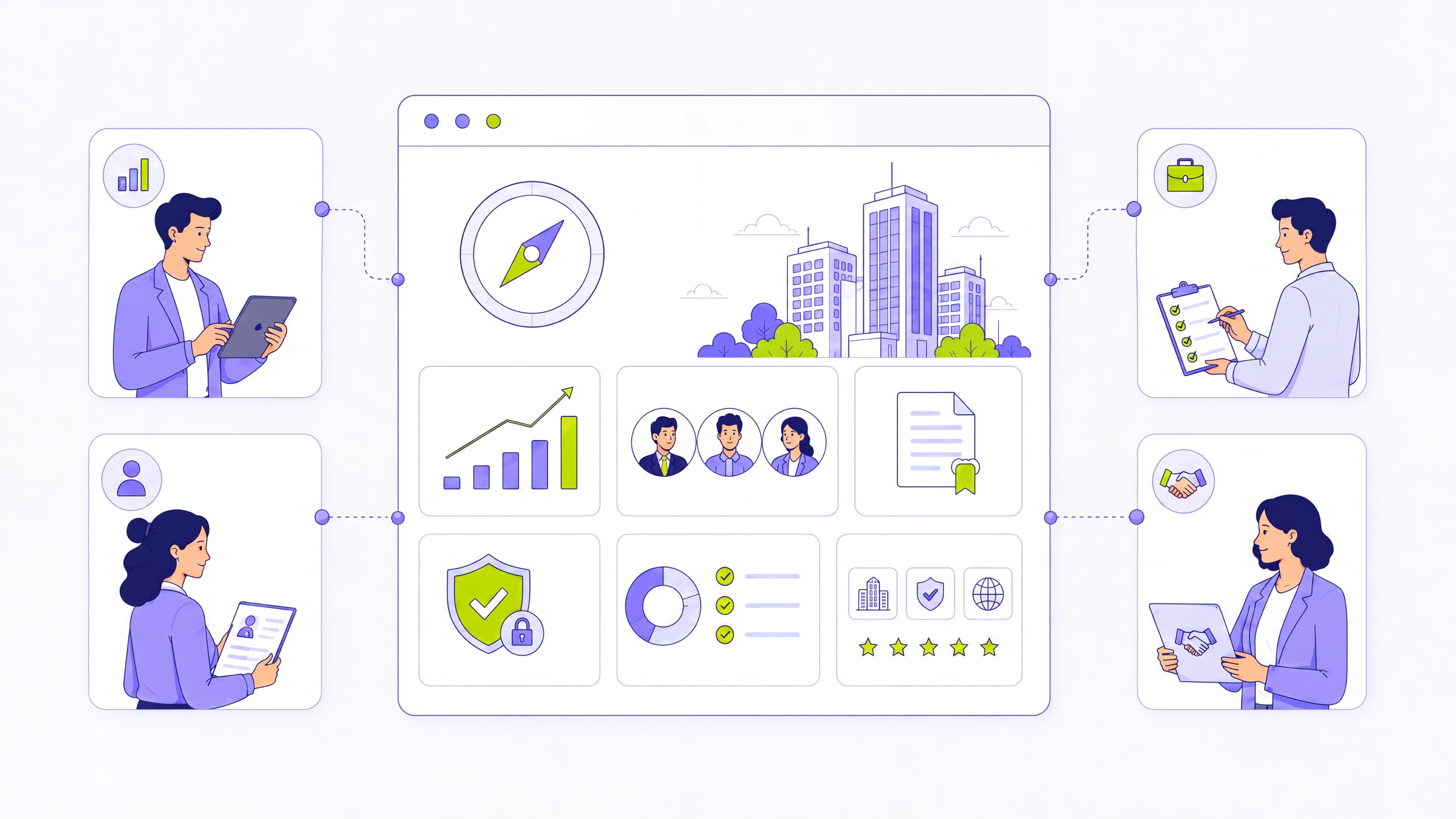
The six services map to four categories a SaaS or B2B buyer evaluates a business design partner on—the key things buyers actually evaluate:
- Strategy. Positioning, category, buyer definition
Shapes what the company sells and how it competes in the market
- Identity. Brand system, voice, visual language
Shapes how the company presents itself across every surface
- Experience. Product, website, digital touchpoints
Shapes how customers use the product and how buyers evaluate it
- Systems. Sales enablement, marketing infrastructure, content frameworks
Shapes how the company scales what it has already built
Partners who only cover one or two of these are specialists. Which is fine when the rest of the stack is solved. It becomes expensive when it is not, because the cost of coordinating four vendors across a Series A launch is measured in months, not rupees, and top down coordination often looks manageable on paper before turning costly in practice.
The difference between business design and traditional branding for SaaS and B2B
Branding agencies design the brand. Business design partners shape the wider business architecture of the company that carries the brand.
The practical difference shows up in three places:
- Scope of thinking. A branding agency thinks about identity. A business design partner thinks about identity, positioning, product, website, and sales as one system built around business goals to find the best solution in the full business context, not just improve identity
- Timeline of engagement. A branding agency runs a defined-scope project. A business design partner runs a multi-phase engagement that evolves with the company
- Nature of the deliverable. A branding agency ships a brand book. A business design partner ships a brand book, a design system, a website, a sales enablement kit, and a marketing playbook, and expects to be judged on how well those pieces work together to create business impact
For SaaS and B2B companies at pre-launch, Series A, or scaling stages, business design is almost always the right choice. A branding agency becomes the right choice later, when only the brand needs updating and the rest of the stack is stable.
How much do business design services cost for SaaS and B2B in India
Business design engagements for SaaS and B2B companies in India typically range from 15 lakhs at the entry point to 60 lakhs and above at the top end, depending on scope, stage, and duration; in global business design programs, validation work is often framed in the 10-50k EUR/USD range before full-scale rollout.
Cost drivers:
- Number of services. Positioning alone costs less than positioning plus identity plus website plus product design, and the aim is not only spending money on assets but creating a validation path before larger commitments
- Team seniority. Founder-led delivery costs more than junior-led delivery, and produces meaningfully different work
- Timeline compression. Twelve-week timelines cost more than twenty-week timelines because they demand higher team density
- Retainer versus one-time project. Retainers cost more in total but produce better long-term outcomes because the partner stays inside the company as it evolves
For SaaS companies preparing for Series A or Series B, the total investment is usually recovered inside the first two months of improved conversion, shorter sales cycles, and reduced discounting pressure from stronger positioning, while also building a stronger base for future growth.
Common mistakes SaaS and B2B founders make
- Hiring a branding agency when the problem is positioning
- Hiring a website studio when the problem is brand
- Hiring a product designer when the problem is the whole customer experience
- Buying five services and hoping they will feel like one company
- Waiting until fundraising is imminent to invest in business design, when founders often jump to an idea before testing whether it fits the business model, even though the strongest signal to investors is a company that already looks and feels investable
- Treating business design as a launch expense instead of a scaling investment, when failing to align internal teams usually leads to weaker outcomes than bringing in business people and designers early enough to evaluate assumptions
Each of these produces the same outcome. A brand that does not feel coherent, a website that does not convert, a product that does not carry the brand, and a sales team that spends its time explaining what should have been obvious from the homepage.
The closing signal
The SaaS and B2B companies that outgrow their category are the ones where brand, product, website, and sales feel like they were built by the same mind for the world of buyers, users, and internal stakeholders the company operates in. The ones that stall are usually the ones where each layer was built by a different vendor, on a different timeline, to a different brief.
At Mellow Designs, we work with SaaS and B2B companies across India and globally on exactly this. Positioning, brand identity, product experience, website, and the systems that hold them together. Business design as one practice, not five vendors. That difference is what separates a company that reads as investable from one that reads as unfinished, with a design mindset helping keep those layers coherent as the company grows.



.svg)


