.png)
India's lab-grown diamond market had a problem it didn't know it had. Every brand chasing the category was talking to the same woman: the everyday wearer, the occasion gifter, the millennial who wanted diamonds without guilt.
No one was talking to the bride. This was a deliberate blind spot. The bridal jewellery market in India operates on deeply entrenched category logic: brides buy gold because gold carries generational weight, or they buy natural diamonds because the category has spent decades tying stone rarity to emotional significance. Lab-grown diamonds, despite being chemically and visually identical to mined stones, had been positioned as the rational, modern, accessible alternative, the antithesis of everything a bride wants to feel on the most significant day of her life.
Veda's founder, Nikita Prasad, saw this gap clearly. The brief to Mellow was not to make another lab-grown diamond brand; it was to build a brand with the emotional gravitas, cultural grounding, and visual grandeur that would make a bride choose Veda the way she chooses her lehenga: because it feels like it was made for her, and only her.
The urgency was real. The lab-grown diamond category in India was growing rapidly, and the bridal white space would not stay unclaimed forever. Getting there first, with a brand built to last, was the entire mandate.

The mistake every lab-grown diamond brand had made was competing on logic, sustainability, price transparency, ethical sourcing. These are real differentiators. They are not emotional triggers. A bride on her wedding day is not making a rational purchase decision; she is stepping into the most significant version of herself she has ever inhabited.


The engagement opened with deep category research, mapping every lab-grown diamond brand active in India, their visual language, their messaging territory, and critically, what they were all leaving unsaid. Mellow ran parallel audience work with brides and their families in Bengaluru and Delhi to understand how bridal jewellery decisions actually get made: who influences them, what emotional language gets used, and where existing brands failed to connect. The output was a positioning platform built around a single truth, the bride deserves to feel like royalty, and no brand was offering her that.
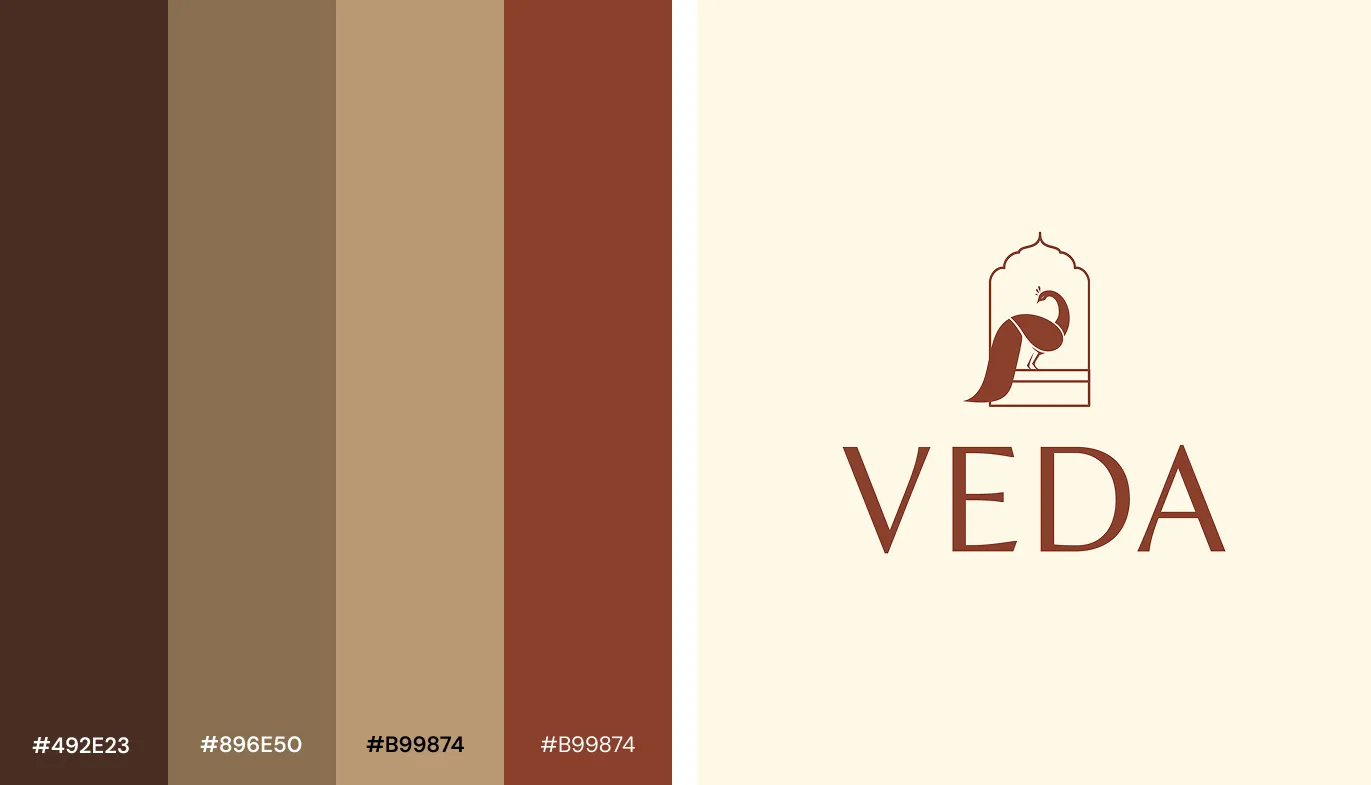
Three distinct visual directions were explored, each interpreting the heritage-luxury axis differently. The chosen direction anchored the identity in the peacock, not as a decorative motif, but as a symbol of the bride's own grace on her wedding day. The logomark places a peacock within a Mughal arch, structured, composed, and unmistakably Indian without resorting to predictable bridal clichés. Typography paired Classico URW's classical serif elegance with Switzer's contemporary clarity, creating a system that reads as both timeless and refined across every scale. The colour palette deliberately moved away from cold metallics; five tones across Beige, Gold, Deep Gold, Rust, and Deep Brown built warmth and intimacy into every touchpoint.
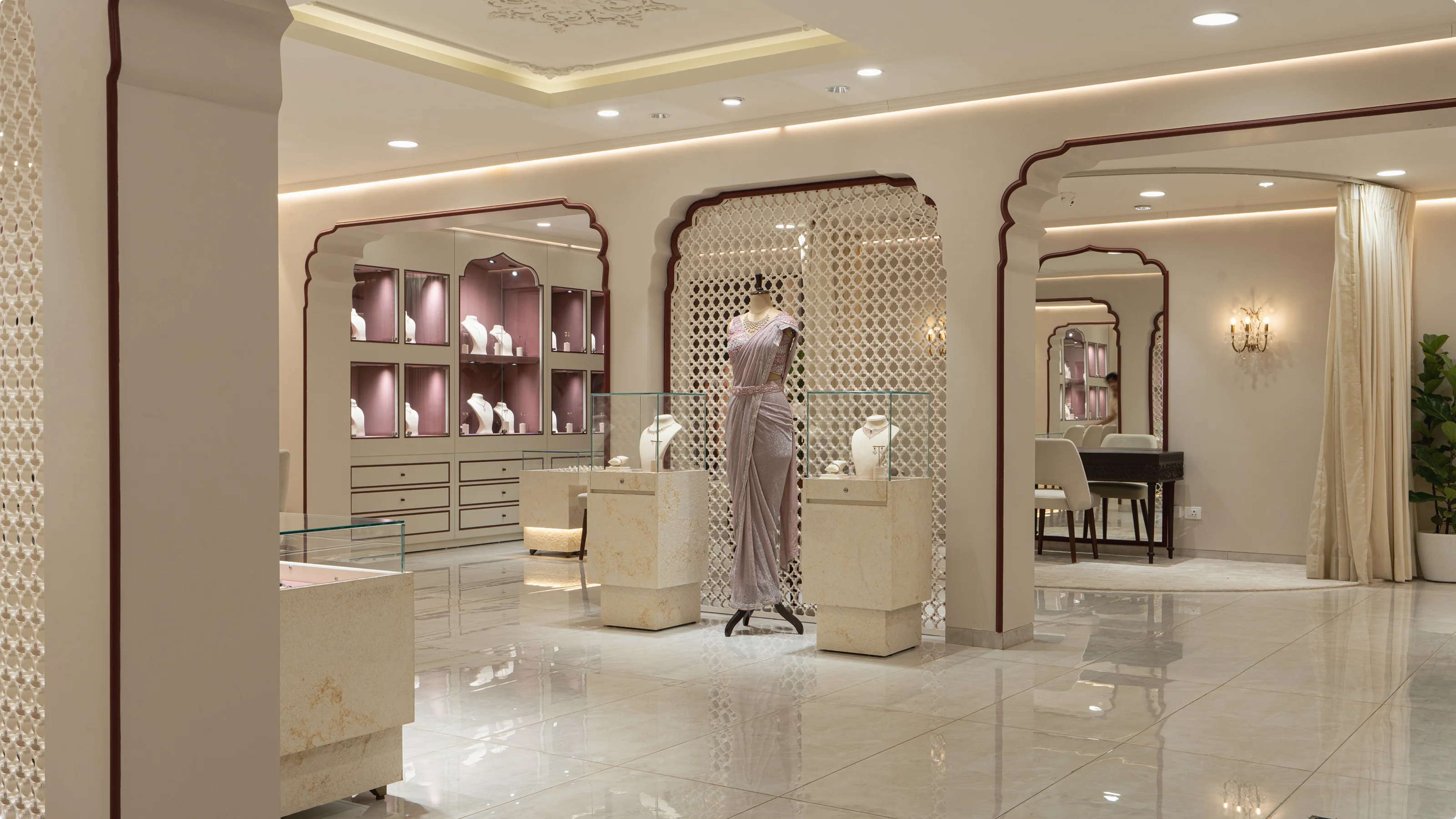
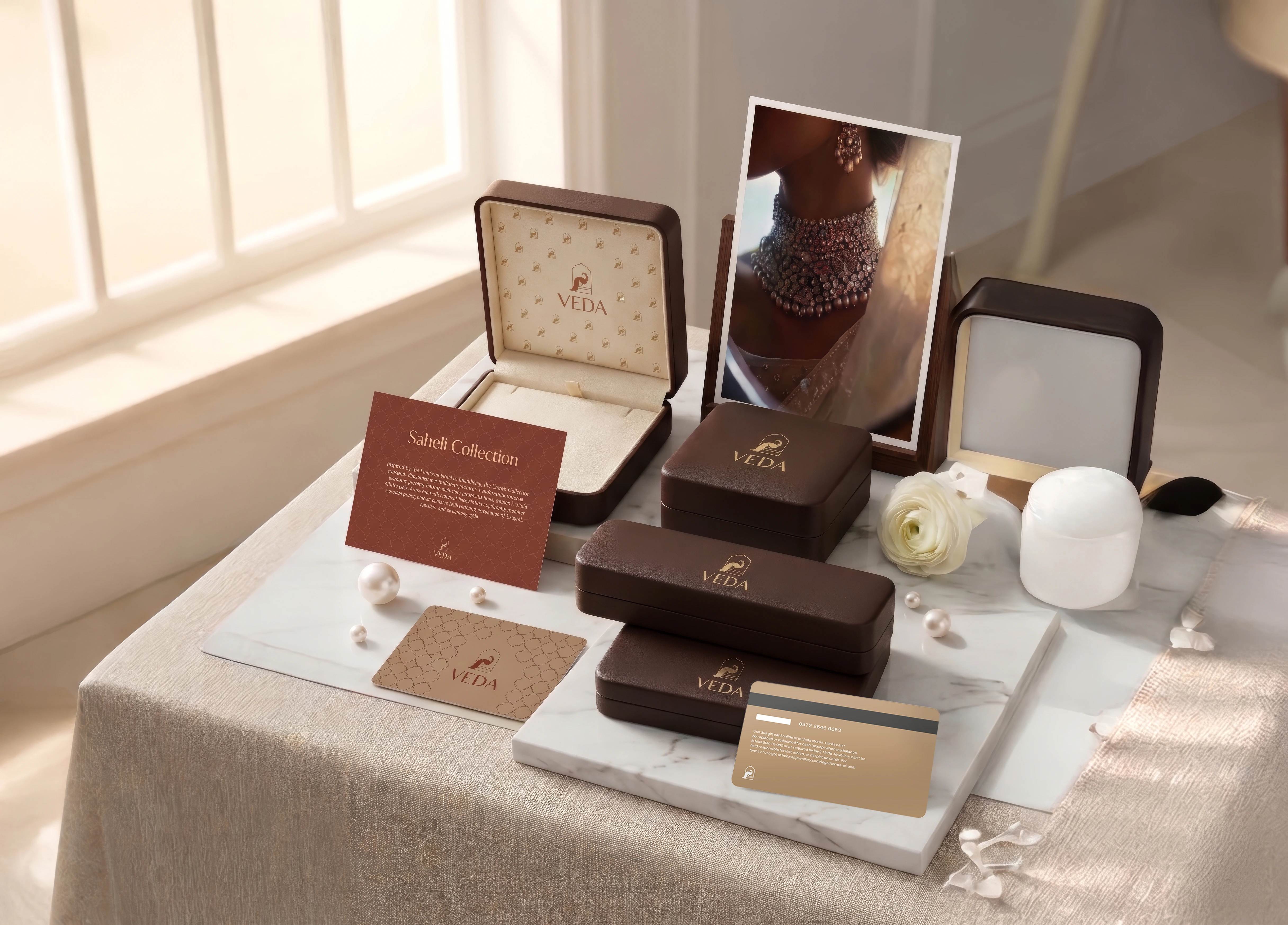
With identity locked, Mellow extended the system across every customer-facing surface: website UI direction, social media presence, packaging design, visiting cards, letterheads, gift cards, collection cards, and brand guidelines. The packaging was treated as a ritual object, velvet textures, Mughal arch motifs, and a sequenced unboxing designed to build ceremonial anticipation. The brand guidelines document codified every rule: logo clearspace derived from golden ratio principles, approved colour pairings, typography scale from 9px footnotes to 90px titles, and art direction standards for both product and people photography.

.png)
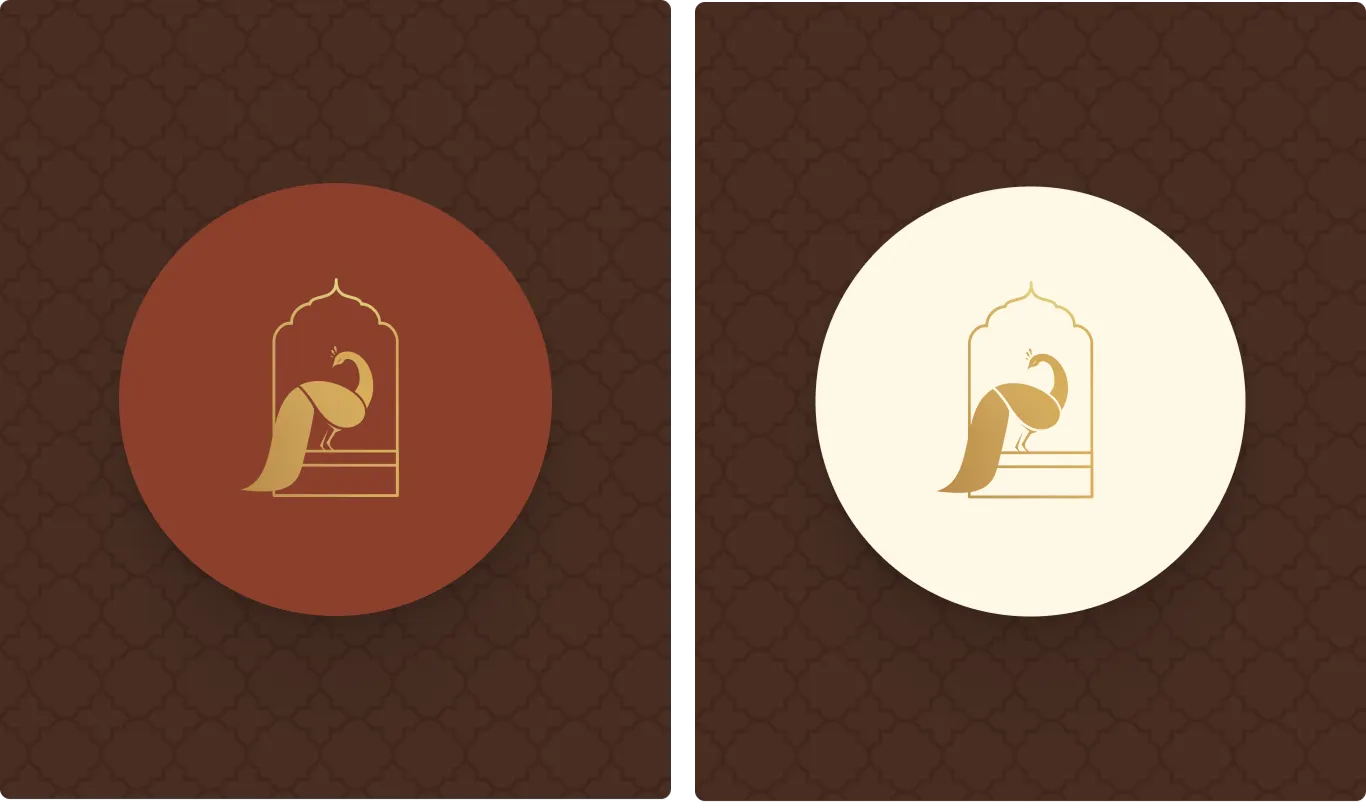
Every bride carries herself with a quiet, unmistakable grace on her wedding day, much like a peacock in full presence. The Veda logomark draws from that same quality. The peacock, housed within a Mughal arch, is not a decorative choice; it is a symbol of the bride's own bearing on her most significant day. Structured, composed, and unmistakably Indian without reaching for predictable bridal clichés. A mark that honours the woman wearing it, not just the jewellery she is choosing.
.png)
The colour palette for Veda moves deliberately away from the cold, metallic tones that dominate the diamond category. Warm, earthy tones ground the identity in something more intimate and human, evoking the richness of Indian wedding rituals without feeling heavy or overdone. Paired with classical serif headlines and contemporary body fonts, the visual system reads as both timeless and refined across every scale and surface.
The packaging was designed to be an experience in itself, not a container, but a ceremony. Intentional velvet textures, Mughal arch motifs, and a sequenced unboxing designed to build anticipation layer by layer. Every detail was considered to make the moment of opening feel as ceremonial as the jewellery inside.


.png)

Before Mellow's engagement, Veda existed as a founding conviction without a language. There was no visual identity, no positioning framework, no brand system that could carry the emotional weight the category required. The bridal lab-grown diamond space in India was completely unclaimed.
₹500 Crore in funding secured, following the brand launch, validating the market's confidence in Veda's positioning as India's first lab-grown diamond bridal jewellery brand.
.png)

.png)
A brand identity engagement of this scope — covering strategy, visual identity, packaging, collaterals, and a full brand guidelines document — typically runs 6 to 9 months. For a brand entering a new category for the first time, the strategy phase alone requires deep category research and audience work before a single visual direction is explored. Veda's engagement ran 8 months from initial brief to a complete, launch-ready brand system. Rushing this process produces identities that look the part but fail to hold up under scrutiny from investors, retail buyers, and — most critically — brides.
A well-executed brand identity does three things: it positions the brand clearly in the mind of the target customer, it creates a visual language consistent enough to build recognition at speed, and it gives investors and commercial partners a reason to believe before the product has had time to prove itself. For Veda, the brand's positioning as India's first lab-grown diamond bridal identity gave it a credible narrative that supported a ₹500 crore funding round. Brand identity, done at this level, is not a marketing asset — it is a commercial one.
A full engagement covers brand strategy and positioning, visual identity (logomark, icon, colour system, typography), packaging design, collateral design, website UI direction, art direction standards, and a comprehensive brand guidelines document. For jewellery brands specifically, packaging and art direction carry outsized importance — the unboxing moment and the visual world built around the product often matter as much as the identity itself.
The most important question a jewellery brand should ask a prospective agency is whether they understand the emotional territory of the category — not just its aesthetics. Fine jewellery, and bridal jewellery especially, operates on deeply felt associations around family, heritage, and identity. Agencies that approach it as a visual exercise produce work that looks beautiful but doesn't land. The right partner should be able to articulate the cultural and emotional white space available to the brand before they open a single design file.
Mellow's engagements of this scope are scoped for brands at a stage where identity is a strategic priority — typically Series A readiness or above, or founder-led businesses preparing for a significant market entry. Investment levels reflect the depth of strategy, the breadth of the deliverable set, and the commercial stakes involved. Contact us for a scoped proposal: mellowdesigns.co/contact