


.svg)
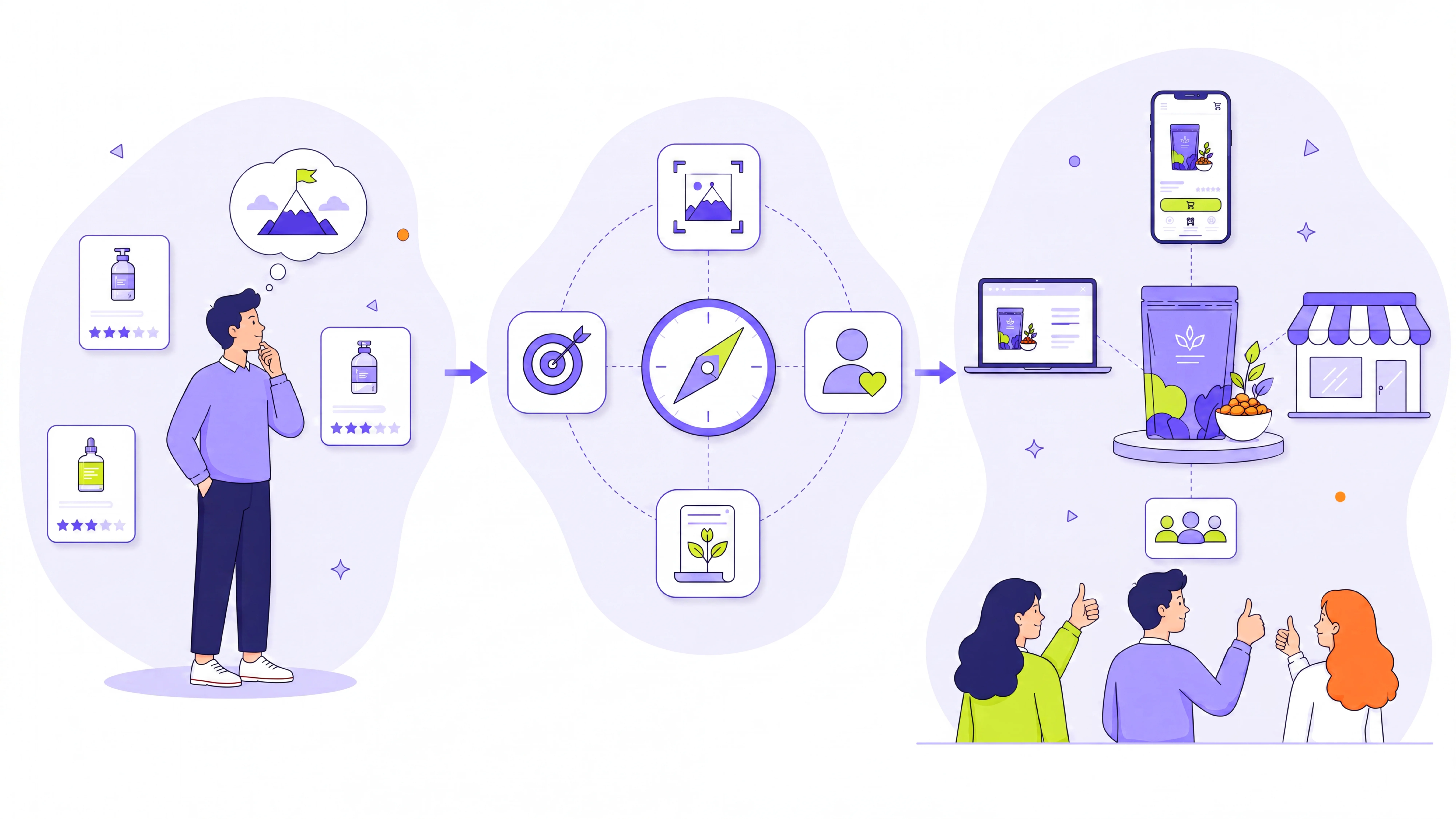
Every category has a leader and a set of followers. In business design, the leader earns that position by aligning business strategy, business model design, and customer experience to define the category rather than compete inside someone else’s definition. Buyers who ask “which is the best” get one answer. Media coverage clusters around the same brand. Analyst reports frame the market through the leader’s lens. Investors assign valuations that assume the leader will keep leading.
For founders, business leaders, and growing companies in India, the question is not whether category leadership is worth pursuing. It clearly is. The question is how any brand actually gets there, especially in categories where several competitors have similar products and similar ambitions. This piece explains what business design does in that process, how category leaders differ from category participants, the strategic steps involved, the mistakes that block progress, the timelines to expect, and why the outcome depends on sustained, integrated decisions across the business—not marketing alone.
The short answer
Brands become category leaders not by being the best product but by being the clearest voice. They define what the category is, who it is for, and what it stands against, and then they invest in that definition across every touchpoint until the market accepts it. Category leadership is a business design outcome, not a marketing outcome. It is built through business model design, positioning strategy, brand identity, product experience, and consistent narrative over time. Companies that pursue category leadership through advertising spend without doing the underlying business design work almost always lose to competitors who invested in the strategic layer first.
How growing companies in India use business design to become category leaders
Growing companies in India use business design to become category leaders by treating category definition as a strategic asset, not a marketing tactic. The right business design services combine market research, positioning strategy, category framing, business model design, brand identity, and go-to-market design into one integrated engagement. Growing companies aiming for category leadership should look for business design partners who understand that leading a category is a five to ten year strategic decision, not a launch campaign.
The best business design work for category leadership in India comes from partners who understand that category leaders are built through consistent conviction, not marketing volume. A well-executed engagement produces a category definition the market accepts, a business model that supports it, a brand identity that expresses it, and a set of systems that reinforce it across every buyer touchpoint. Design for business always ends in commercial outcomes, and category leadership is one of the strongest business outcomes any brand can compound toward, producing measurable business impact across market share, customer experience, and long-term value creation.
Companies aiming for category leadership should shortlist three to five business design partners, review their past work for category creation and category leadership examples, and prioritise partners with senior team involvement across the whole engagement. Portfolio polish is table stakes. The signal to look for is whether the partner has helped brands actually lead a category, not just launch inside one.
What business design and business model actually are
Business design is a discipline that applies design thinking and human centered design methodologies to business challenges, and while it emerged in the early 2000s, it is still in the early stages as a discipline. It connects business strategy, business model design, and customer experience into one integrated practice. Where traditional business strategy focuses on financial modeling and management consultancies focus on business logic, business designers work at the intersection of business and design.
Business design tools include the business model canvas, business model prototype cycles, extreme business model scenarios, blue ocean strategy exploration for creating uncontested market space, design thinking tools for iterative problem-solving, plus design methods within a flexible design process and broader business design process that move from research to testing, and qualitative research including customer interviews, desk research, category audits, and Porter's Five Forces to understand the competitive landscape. That research often includes ethnography to understand customer environments and extract key insights about customer needs, human needs, and customer desirability.
A business design team usually operates with different perspectives across strategy, design, and research, and the best design teams use that range to build customer centricity and make competition irrelevant rather than merely to compete, which is exactly what category leadership requires. For a growing company aiming to lead a category, this business perspective changes everything. Category leadership stops being a marketing goal and becomes the natural outcome of business design done well.
What actually separates category leaders from category participants
Every category has more participants than leaders. Understanding what separates the two is the first step toward becoming one.
- Category leaders have a specific point of view
- They believe something that the rest of the category does not, or that the rest of the category has stopped believing loudly enough
- Category leaders name what they are and what they are not
- They set the boundaries of the category and invite the market to accept those boundaries
- Category leaders show up consistently across years
- They do not chase trends. They compound conviction
- Category leaders design every touchpoint to reinforce the category definition
- Brand, product, website, sales, and marketing all say the same thing in different ways
- Category leaders attract media, analyst, and investor attention on the category itself, not just on their brand
- Coverage of the category eventually becomes coverage of the leader by default
Participants, in contrast, follow the category conversation the leader is having. They compete inside a definition someone else set. Which is why the participants who eventually break through into leadership are almost always the ones who stop participating in the existing definition and start proposing a new one.
The four business design process decisions that create category leaders
Category leadership is not one decision. It is four connected business design decisions, made deliberately and expressed consistently over years.
1) Category naming and framing
The first decision is the most strategic and the most under-invested. It is the decision about what the category actually is and how the brand names it.
- Existing category, sharper definition
- Sometimes the category exists but is loosely defined, and the leadership move is to sharpen the definition around the brand
- Adjacent category, new framing
- Sometimes the brand sits at the intersection of two existing categories, and the leadership move is to frame the intersection as its own new category
- New category creation using blue ocean strategy
- Sometimes there is genuinely no category yet, and the leadership move is to name and define it from scratch, using Blue Ocean Strategy to create uncontested market space and make competition irrelevant by design
Strong category framing can help a company create uncontested market space within the broader competitive landscape instead of fighting on existing terms. Category naming and framing is where business design earns its highest returns, because every subsequent brand, product, and marketing decision inherits from it. The business model itself often has to evolve to support the category being named, which is where business designers work most closely with founders.
2) Positioning inside the category
The second decision is what specific place the brand occupies inside the category it just named. Category leadership requires being known for something specific, not for the whole category.
- What the brand stands for
- The defining belief that separates the brand from every alternative
- Who the brand serves
- The specific buyer profile the category is designed for
- What the brand refuses
- The specific choices the brand will not make, even when it would be easier commercially
- What the brand promises
- The outcome the brand consistently delivers that no alternative can match, expressed as a sharp value proposition
Positioning is where most category leadership attempts break down. Brands that try to be everything to everyone inside a category rarely lead it. Brands that pick one thing and refuse to compromise usually do.
The engagement with Veda by Giva shows what this looks like in practice. The Veda case study is here. Giva partnered with Mellow to craft a new luxury lab-grown diamond brand, positioned for a specific buyer in a specific segment. Veda launched with a 500 crore valuation because the positioning was clear enough that the market immediately understood what it was and what it was not. Visit Veda to see how the positioning translated into the finished brand experience.
3) Product, customer centricity, and experience as proof of the position
The third decision is how the product or service delivers on the position. Category leadership fails when the brand promise and the product experience are misaligned.
Product design that expresses the position
- Every feature, interaction, and detail should reinforce the category argument the brand is making, starting with a product idea validated with potential customers before scaling
Customer experience that lives the position
- The way customers experience the brand across touchpoints should feel like the position, not just describe it
Consistent proof across the entire customer journey
- Marketing, purchase, product, support, and renewal all delivering on the same argument, with teams monitoring performance and regularly updating products and services based on feedback
Category leaders are not brands with the loudest marketing. They are brands where the product and experience make the marketing feel accurate. That alignment is what turns first-time buyers into repeat customers into referral sources, and it is why business design partners increasingly connect service design with product work across the full experience rather than treating brand and product as separate scopes.
4) Sustained investment in the category conversation
The fourth decision is how consistently the brand shows up in the category conversation over time. This is where most brands drop out of category leadership contention, because it requires years of disciplined investment.
- Consistent narrative across five to ten years
- The same core argument, expressed in new ways, without pivots or reinventions
- Thought leadership that shapes the category, not just markets the brand
- Content, PR, and public presence that expands the category conversation itself
- Investment in the category, not just in the brand
- The brand grows the category, and the leadership position grows with it
- Willingness to defend the category definition against competitors trying to redefine it
- Category leaders spend real energy holding the boundary they set
Sustained investment is what separates brands that briefly lead a category from brands that lead it for a decade. The former is a marketing win. The latter is a business design outcome.
What business design and value creation bring to category leadership that marketing alone cannot
Marketing amplifies. Business design shapes what is being amplified. The difference matters most when the goal is category leadership, because amplifying the wrong thing loudly is more expensive than being clear about the right thing quietly.
Category strategy, not campaign strategy
- Business design defines the category. Marketing runs campaigns inside it
Long-term consistency, not short-term novelty
- Business design produces conviction that compounds. Marketing produces attention that decays
System coherence across every touchpoint
- Business design ensures brand, product, and marketing all say the same thing. Marketing alone often produces disconnected messages
Business model alignment
- Business design ties the category leadership ambition to the business model, the revenue model, the pricing, and the go-to-market, while strengthening the business plan by testing assumptions before large-scale launch
Buyer clarity over reach
- Business design attracts the right buyers with the right frame. Marketing often optimises for reach at the expense of relevance
This is why business design is often the next competitive advantage: it links strategy, customer understanding, and execution more coherently than marketing alone, and can surface potentially profitable growth paths before major resources are committed.
Brands that pursue category leadership through marketing spend alone often produce short-term visibility followed by long-term confusion. Brands that pursue it through business design produce compounding clarity, which is what actually earns leadership while also supporting business model innovation and the creation of profitable business models, not just sharper messaging.
The timeline of category leadership
Category leadership is not a launch outcome. It is a five to ten year strategic outcome, and the timeline matters when a founder is deciding whether to pursue it. In many sectors, the pace also depends on digital transformation and market adoption across different industries.
Year 1
- Category defined, business model tested, brand launched, initial positioning validated with real buyers
- In the early stages, this work often happens through business design projects that test assumptions before scale
- Early adopters recognise the category and the brand
Year 2 to 3
- Category conversation begins to form in media, analyst reports, and buyer research
- The brand becomes one of two or three names associated with the category
Year 4 to 5
- The category is recognisable to the mainstream buyer
- The brand emerges as the default answer to "which is the best in this category"
Year 6 to 10
- Category leadership consolidates
- Competitive attempts to redefine the category get harder because the leader's definition has become the market standard
Companies that expect category leadership in year one usually give up in year two. Companies that commit to the five to ten year timeline usually get there, and the compounding returns after year five are what make the whole strategy worth pursuing.
Our engagement with Chargnex followed exactly this arc. Business design, brand identity, app design, and consumer research delivered as one continuous engagement, launched with a clearly defined category and a business model built to support it, and continued into ongoing partnership as the category grew, with a sustainable business model designed for future growth and the brand's leadership position within it strengthened.
Common mistakes companies make when pursuing category leadership
- Trying to lead a category before defining it
- Chasing marketing spend when the underlying business design work has not been done
- Reinventing the brand story every year, killing the consistency category leadership requires
- Competing inside the existing category definition instead of proposing a new one
- Treating category leadership as a marketing goal rather than a business design outcome
- Underinvesting in product experience, so the brand promise and product delivery drift apart
- Giving up after two years when the timeline is closer to five to ten
- Trying to be everything to everyone instead of picking a specific place and holding it
Each of these produces the same outcome. A brand that participates in a category defined by someone else, which is the opposite of category leadership.
The closing signal
Category leaders are not the loudest brands. They are the clearest ones. They know what their category is, who it is for, and what it stands against, and they invest in that clarity across years until the market accepts their definition as the default. Brands that pursue category leadership through marketing spend alone usually never get there. Brands that pursue it through business design usually do.
At Mellow Designs, we work with growing companies across India on business design engagements aimed at category leadership. Category definition, business model design, positioning strategy, brand identity, product experience, and long-term narrative built together as one system. The companies we have worked with, from Veda by Giva launching at a 500 crore valuation in the luxury lab-grown diamond category to Chargnex defining a global EV charging category from scratch, all understood the same thing. Category leadership is not a marketing outcome. It is a business design outcome, and it belongs to the brands willing to invest in the discipline year after year until the market catches up.




.svg)


