


.svg)

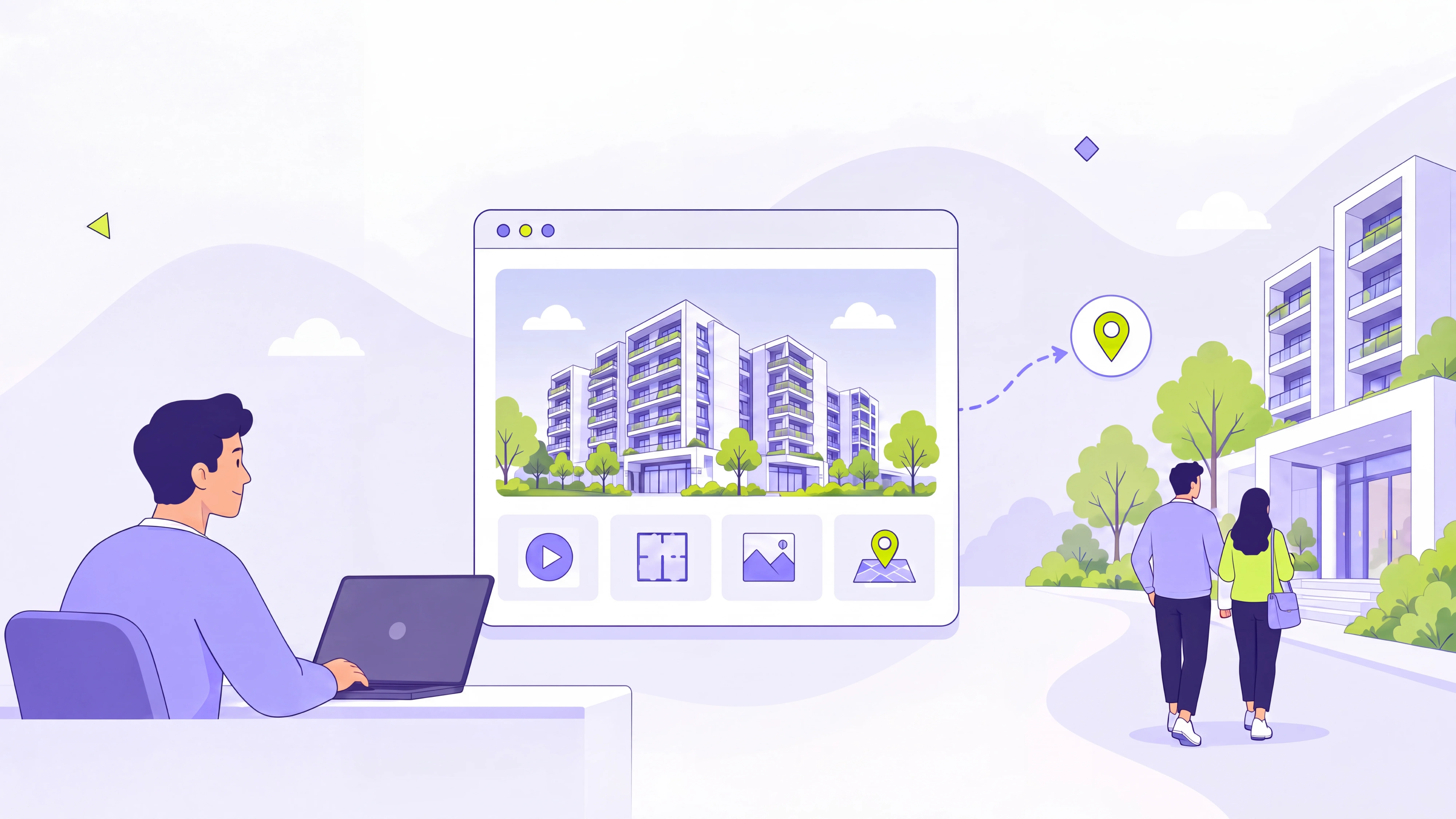
A buyer looking at a 5 crore apartment does not walk into the sample flat cold. By the time they arrive, they have already spent weeks reading, scrolling, searching, and comparing. The site visit is not the beginning of the sales process. It is the last stop in it.
For premium real estate, everything that happens before that visit is where trust is either built or lost. The brochure the buyer downloaded. The website they browsed. The video walkthrough. The developer's name they typed into search bars. Each of these moments either compounds credibility or quietly erodes it.
The developers who win the premium segment understand this. Their real estate branding is not a marketing exercise. It is the entire pre-visit trust engine.
The short answer
Premium real estate brands build trust before the site visit through five connected layers. Positioning that names a distinct place in the real estate industry, a strong visual identity that signals price point without stating it, a strong online presence that lets the buyer self-qualify with confidence, marketing materials that survive forwarding, and consistent branding across the channels a serious buyer actually uses. Developers who invest in these layers close faster, discount less, and attract better buyers. The ones who skip them compete on price alone.
How to build a strong real estate brand that generates qualified inquiries
Building a successful real estate brand in India in 2026 requires a different playbook than selling mass-market housing. The right real estate branding strategy combines positioning, brand identity, website experience, brochure design, and multi-channel marketing strategies into one connected engagement. A developer working on a premium project should evaluate branding partners on their ability to hold all of these together, not just their ability to produce a professional logo or a brochure.
The best real estate branding in India comes from partners who understand that the buyer of a luxury home is not shopping for a house. They are shopping for a story, a neighbourhood, a lifestyle, and a signal of arrival. This changes what the successful brand has to communicate and how it has to feel. A real estate brand that reads like a mass-market builder will attract mass-market buyers, no matter how expensive the actual apartments are. Real estate branding efforts that ignore this end up producing marketing assets that look premium but attract the wrong target audience.
Developers hiring for real estate branding should shortlist three to five studios, insist on seeing website and campaign work for previous developer clients, and prioritise partners who can show measurable outcomes. Inquiry quality, site visit conversion, brochure downloads, and average deal size are the metrics that matter. Portfolio polish is table stakes. The real signal is whether the partner has shipped work that changed how a project sold in a competitive market.
Why trust is different in premium real estate
Trust in mass-market housing is built through visible construction progress, verified approvals, and clear price advantage. Trust in premium real estate is built through something harder to measure and much harder to fake.
A buyer at the 3 to 15 crore range is asking questions the brochure rarely answers directly.
- Will I be surrounded by people I want to live near
- Will this address hold or grow in value over ten years
- Will this look and feel like a home I am proud to invite people to
These questions are answered by everything except the sales pitch. The photography style, the language on the website, the paper quality of the printed brochure, the way the security guard greets the buyer at the gate. Every touchpoint either confirms the buyer's belief that this is the right choice, or gives them a reason to hesitate.
The five trust layers a premium real estate brand needs
Positioning that names a distinct place in the market
Most premium real estate positioning falls into the same set of phrases. Luxury living. Exclusive residences. Redefining premium. Words that no longer mean anything because everyone uses them.
Sharp positioning does the opposite. It names a specific place in the market that no competitor can claim, and it starts with real estate competitor analysis to understand what has already been said.
- Category positioning. Not "luxury apartments" but "sea-facing homes designed for people who work from home three days a week"
- Specific enough that the wrong buyer self-selects out
- Neighbourhood positioning. Not "prime location" but a defined argument for why this specific micro-market will outperform in the next decade
- Backed by data and market trends the buyer can independently verify
- Buyer positioning. Not "discerning homeowners" but the actual profile the project is designed for
- CXOs, second-home buyers, returning NRIs, tech founders, whichever it actually is
- Unique value proposition. A clear articulation of what the project offers that no other project in the segment does
- Written to be memorable, not clever
The engagement with Lands & Homes started here. The company was building a real estate business for a specific segment of buyers, and the positioning work happened before any visual design began. The Lands & Homes case study is here. Once the positioning was locked, the brand identity, website, and app all inherited from it and stayed consistent through launch.
A strong visual identity that signals price point without stating it
A premium buyer can tell within three seconds whether a project is meant for them or not. They rarely articulate why. The answer is almost always in the visual identity system, and specifically in whether the brand looks like more than just a logo or feels like a fully considered system.
A successful real estate brand builds its identity across several core elements.
- Professional logo. A well designed logo that holds up across property listings, business cards, and marketing channels
- Consistent logos across every application signal a serious developer
- Typography. Premium projects use restraint, custom or refined typefaces, generous spacing
- Not condensed sans-serif in all caps stretched across a 2 crore apartment banner
- Brand colors. A muted, intentional palette that signals confidence rather than urgency
- Consistent brand colors across every touchpoint reinforce brand recognition and brand recall
- Professional photography. Considered composition, natural light, human scale, actual homes not renders
- The buyer can feel the difference between architectural photography and stock renders
- Distinctive brand voice. Language that respects the buyer's intelligence
- "A home designed around how you actually live" over "Experience the pinnacle of luxury living"
- Brand personality. A defined character that comes through in every client communication
- Warm but restrained, confident but never loud
All of this is documented in a brand style guide or brand guidelines that ensures brand consistency across every team, agency, and channel. The developers whose branding actually converts premium buyers are the ones who understand that visual identity is a signal system. Every choice either says "we know who you are and this is for you" or "we are hoping anyone will buy this".
A strong online presence that lets the buyer self-qualify
The premium real estate buyer does not want to be sold to on the website. They want to be given enough information to decide for themselves whether the project deserves a site visit. A strong online presence is what makes that possible.
A high-converting real estate website needs:
- Fast, uncluttered hero section. The project name, location, defining architectural feature, and a single strong image
- Not a slideshow of every amenity and every floor plan crammed into the first fold
- Deep floor plan and specification pages. For a buyer who is comparing three shortlisted projects
- Downloadable, printable, shareable with a spouse or advisor
- Neighbourhood context. Genuine information about what surrounds the project
- School proximity, commute times, cultural anchors, not just "close to everything"
- Developer story and track record. Past projects, timelines delivered, honest about the company's history
- The buyer will search anyway, better to control the brand story
- Valuable content. Neighbourhood guides, buyer guides, architectural essays that build authority
- Positions the developer as a thoughtful category leader, not just a seller
- Site visit booking flow that respects the buyer's time. Clear slots, calendar integration, no aggressive follow-up scripts
- The buyer's first interaction with sales should feel like the developer's first interaction with the buyer
Consistent branding across the website, from typography to photography to voice, is what makes the buyer trust the numbers on the specification sheet. Without brand consistency, the buyer starts to doubt everything else.
Marketing materials that survive forwarding
Every premium real estate brochure and video gets forwarded. To spouses, to parents, to financial advisors, to WhatsApp groups. The buyer is rarely making the decision alone. The marketing materials have to hold up after being shared, without the salesperson in the room to explain them.
- Printed brochure. Serious paper stock, careful editorial pacing, photography that feels like a design magazine
- The buyer's spouse should want to keep it on the coffee table
- Video walkthroughs. Cinematic, human-scale, not overly polished
- A drone shot of the exterior followed by a real walkthrough of a real apartment
- Digital deck. Shareable PDF that works on mobile
- Because that is where 70% of second opinions are formed
- Location and neighbourhood film. A separate piece that sells the area, not just the building
- For buyers weighing three projects across three neighbourhoods
- Business card and stationery system. For sales team and leadership, designed to match the rest of the brand
- Small details, but the ones a premium buyer notices when they meet the team
The projects that close in premium segments are the ones where the marketing materials do the selling in the buyer's absence. The salesperson opens the door. The brand walks the buyer through it.
Consistent presence across the channels premium buyers actually use
Premium buyers do not spend time on the same digital surfaces as mass-market buyers. Meta ads targeting broad audiences will pull in the wrong inquiries and produce weak lead generation. The right channels are narrower and more expensive to earn attention on, and consistent messaging across them is what compounds brand visibility over time.
- Search engines. For buyers actively comparing projects and searching for developer names
- Requires strong SEO on developer name, project name, and neighbourhood terms
- LinkedIn. For CXOs and business owners in the target income bracket
- Content-led, not ad-heavy
- Social media platforms. Instagram and YouTube for lifestyle and neighbourhood content
- Social media engagement here signals a living, active brand, not a static listing
- Curated print and OOH. Business magazines, airport lounges, premium residential complexes
- Still effective for reaching high-net-worth buyers who ignore digital ads
- PR and thought leadership. Interviews, project reveals, architectural coverage
- Third-party credibility is worth more than paid media in this segment
- Community events. Launch previews, neighbourhood walks, curated dinners for early buyers
- Creates a lasting impression that no ad campaign can match
- Referral and community. Existing homeowners referring new ones
- The strongest source in the segment, and the one branding directly influences
Our track record in the category includes work on projects with Ceyone that contributed to over 1,000 crores worth of real estate properties sold, alongside collaborations with Puravankara and DLF. The pattern across those engagements is consistent. When the brand, digital experience, and marketing materials are designed together instead of piecemeal, premium buyers move faster and haggle less.
The four categories of trust signals
The five layers above map to four categories of trust signals a premium buyer subconsciously evaluates before booking a visit.
- Category signals. Does this project belong in the premium segment at all
- Communicated through positioning, price transparency, and neighbourhood context
- Craft signals. Has care been taken with the small things
- Communicated through typography, photography, brochure quality, and website polish
- Track record signals. Has this developer delivered before
- Communicated through case studies of past projects, delivered timelines, and client feedback
- Community signals. Who else is buying here
- Communicated through the buyer profile the marketing attracts, and the visible presence of loyal clients
Developers who invest in all four attract the right buyers. Developers who invest in only one or two get inquiries that do not convert, and site visits that end without a booking.
What separates a premium real estate brand from a mass-market one
The difference is not the price of the apartment. It is the consistency of the decisions made across every buyer touchpoint.
- Photography. Real, considered, restrained versus generic, over-lit, staged
- Language. Specific, confident, understated versus generic, superlative-heavy, urgent
- Brochure. Editorial pacing, quality paper, careful typography versus glossy, cluttered, feature-listed
- Website. Clean, information-rich, respectful of the buyer versus popup-heavy, discount-focused, aggressive
- Sales interaction. Consultative, patient, informed versus scripted, pressured, incentive-driven
Any developer can build a premium project. Fewer can hold the brand consistently across every touchpoint the buyer sees. That consistency is what actually justifies the premium and produces a professional image the market takes seriously.
How much does premium real estate branding cost in India?
Premium real estate branding engagements in India typically range from 20 lakhs at the entry point to 1 crore and above for large developers with multi-project portfolios.
Cost drivers include the scope of services, the number of projects the brand system has to hold across, the depth of positioning and market research work, and whether the engagement is a one-time project or an ongoing partnership.
For a single premium project of 3 to 10 crore average ticket size, developers typically invest between 30 and 60 lakhs on integrated branding, website, brochure, and launch marketing. The investment is usually recovered inside the first two or three bookings, because premium branding directly reduces discount pressure and shortens sales cycles.
Common mistakes premium real estate developers make
- Treating the brochure as the primary marketing asset and the website as an afterthought
- Using stock renders instead of investing in architectural photography and real walkthroughs
- Hiring a mass-market ad agency for a premium project and getting mass-market inquiries
- Discounting under pressure instead of investing in the brand signals that support the price
- Treating brand and sales as separate departments, when the buyer experiences them as one interaction
- Launching the marketing before the positioning is locked, and then trying to reverse-engineer the brand story
- Skipping brand guidelines and letting each vendor produce inconsistent marketing assets
- Ignoring core values in the brand foundation, which shows up later as inconsistent messaging
Each of these produces the same outcome. Low-quality inquiries, longer sales cycles, and buyers who negotiate hard because they cannot see what makes the project worth the ask.
The closing signal
Premium real estate is a category where trust is built long before the salesperson enters the room. The developers who understand this treat every touchpoint as a signal. The website, the brochure, the photography, the language, the way the security guard greets the buyer at the gate. All of it is the brand.
At Mellow Designs, we work with real estate developers across India on positioning, brand identity, website, brochure design, and integrated marketing systems that connect all of it into one buyer experience. The projects we have worked on have collectively sold over 1,000 crores of real estate. The pattern is always the same. When trust is designed into every touchpoint before the buyer arrives, the site visit becomes a formality, not a negotiation.




.svg)


