


.svg)
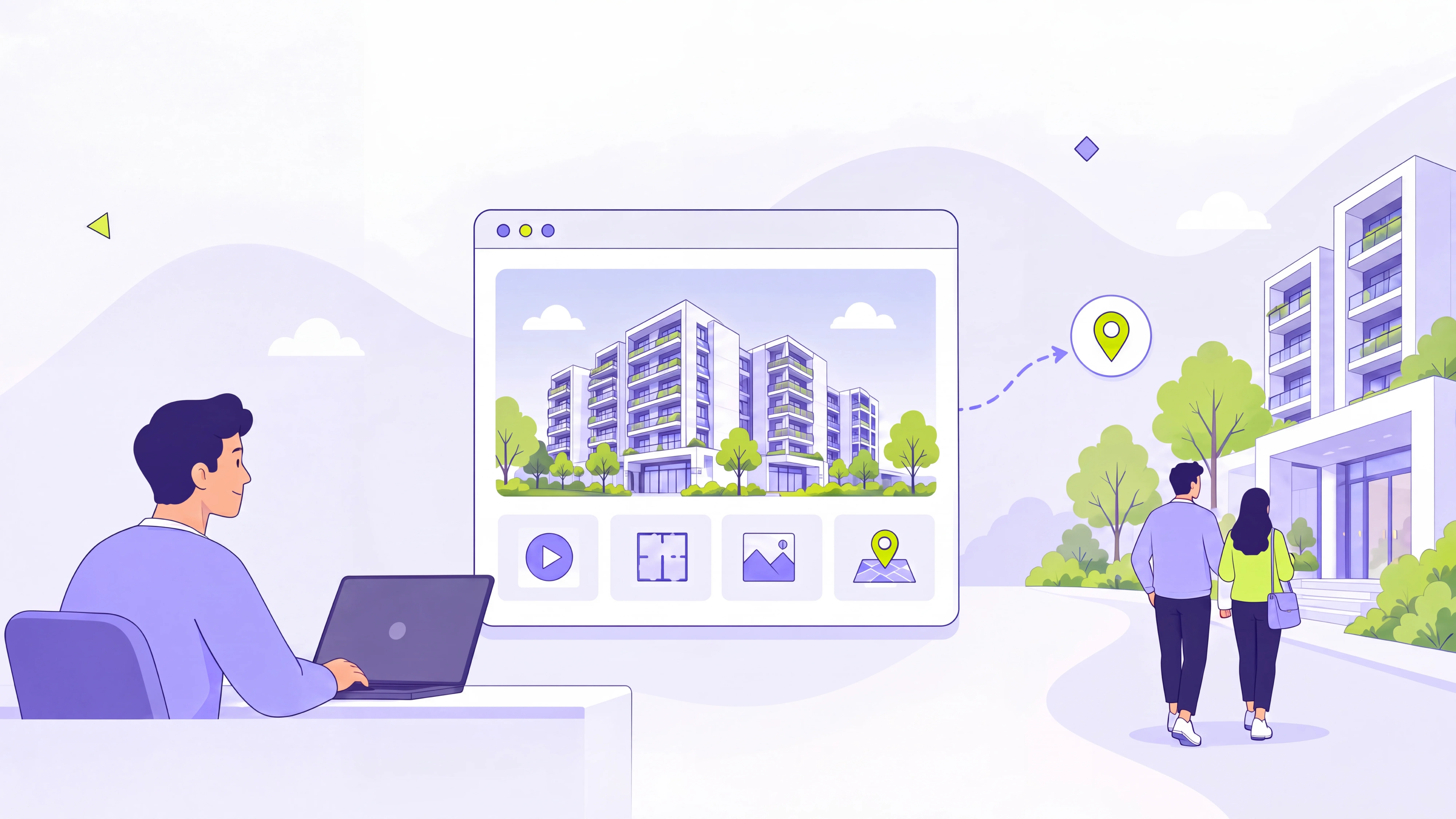
Walk through the digital presence of the top ten real estate companies in any Indian city and something becomes obvious very quickly. Almost every website looks the same. The same hero image of a rendered building. The same "world-class amenities" copy. The same amenity icons. The same contact form asking for phone number so a sales team can call within an hour. Same fonts. Same photography style. Same everything.
Real estate is one of the few remaining industries where a serious buyer, spending crores on a single decision, encounters a digital experience that looks like it was templated from the developer down the road. And yet the digital experience is where every serious buyer starts, forms their first impression, and quietly decides whether the project deserves a site visit.
The short answer
Real estate digital branding today has to do the strategic work that traditional marketing methods used to leave for the sales team. It has to establish category differentiation, signal the quality of the physical project through the quality of the digital work, build enough trust to convert a serious buyer into a site visit, and stand up to comparison against ten other real estate companies who look almost identical online. Business design is the discipline that scopes real estate brand and website work against these outcomes, rather than treating the site as a rendered brochure with a lead form on top.
How growing real estate companies build differentiated digital presence
Real estate digital branding for growing companies is built by scoping the digital experience as the primary buyer touchpoint, not as a sales support asset. The right business design services combine positioning, brand strategy, content strategy, website design, and real estate digital marketing into one integrated engagement that produces measurable outcomes across lead quality, site visit conversion, and buyer confidence.
The best real estate marketing work comes from partners who understand that the buyer journey today starts and often ends online. A well-executed engagement produces a digital presence that differentiates the developer from the ten other real estate companies competing for the same buyer, signals the quality of the physical project through the quality of the digital work, and builds enough trust to convert serious buyers into site visits. Design for business always ends in commercial outcomes, and for real estate, the outcomes show up as better site visits, higher qualified leads, and shorter sales cycles.
Why business design fits real estate
Business design is a discipline that applies design thinking and human centered methodologies to business challenges. It connects business strategy, business model design, and customer experience into one integrated practice. Where traditional business strategy focuses on financial modeling and management consultancies focus on business logic, business designers work at the intersection of business and design.
For a real estate developer, this shows up as one integrated engagement instead of separate vendor briefs. Positioning shapes the website. Website shapes content. Content shapes what buyers find when they compare five to ten developers in the same evening.
The outcome is a digital presence that carries the same intent from the hero image to the sales gallery.
What serious real estate buyers actually do online
Understanding what real estate buyers actually do online is important. The behaviour has changed significantly in the last five years.
- They spend weeks researching before contacting any developer
- The buyer journey today is 60-80 percent complete before the first sales conversation
- They compare five to ten real estate companies online in the same evening
- Which means differentiation has to be immediate and obvious
- They read the developer's other project work, not just the current property listings
- Portfolio quality matters more than current project pitch
- They watch construction quality videos, walkthrough tours, and virtual tours
- Video content shapes trust in ways brochure copy cannot
- They read founder and leadership content, blogs, and market perspective
- Content marketing shapes how the developer is perceived
Real estate digital work that treats the buyer as someone who fills in a form after seeing the hero image is designed for a buyer who no longer exists.
Things real estate brands need to do differently online
For real estate developers who want to stand out in a category where everyone looks the same, six specific interventions produce measurable differentiation.
Own a distinctive category position, not a generic premium claim
Every developer claims premium. Very few own a distinctive category position that makes the premium claim believable.
- Name what you are actually building for
- "Sea-facing homes for families" is stronger than "luxury living"
- "Boutique homes in heritage neighbourhoods" is stronger than "world-class amenities"
- Frame the category on your own terms
- Do not accept the conventions competitors have set
- Signal the buyer profile you actually want
- Premium buyers want to know the developer chose them, not the reverse
The engagement with Lands & Homes shows what category positioning looks like when it is executed properly online. The Lands & Homes case study is here. The platform broke category conventions by treating property search as a curated experience rather than a listing catalogue, which is what differentiated it from every competitor doing generic property discovery. Visit Lands & Homes to see how the positioning translates into the finished digital experience.
Treat the website like a business asset, not a brochure
Most real estate websites are digital versions of the sales brochure. The best ones are business assets designed for the full buyer journey.
- Position-led hero that answers what the project is, who it is for, and why it is different in one screen
- Content that supports the research phase, not just the enquiry phase
- Portfolio pages that build developer credibility across projects
- Story and philosophy pages that explain the developer's approach to building
- Sales tools (floor plans, pricing, availability) built into the site, not gated behind a form
- Landing pages designed for specific audiences and specific project launches
Buyers who can research thoroughly on the site arrive at the sales gallery already decided.
Signal physical quality through digital quality
The quality of the digital work signals the quality of the physical project. Buyers making crore-scale decisions read the site as a proxy for the build quality they will eventually inspect.
- High quality images that treat the project as an editorial subject, not stock hero imagery
- High quality visuals across every page, including virtual tours and walkthrough video content
- Typography and layout that signals care equivalent to the finish quality claimed
- Content design that shows the same attention to detail as the physical work
A developer whose digital work is as considered as the physical work signals confidence and craft. A templated site teaches the buyer that the developer will cut corners where nobody is watching closely.
The engagement with Ceyone shows this principle in action. The Ceyone case study is here. The real estate brand needed a digital presence that carried the premium positioning of the physical projects. Every layer of the brand system was engineered to signal quality at the same level the buyer would eventually experience on site. Visit Ceyone to see how the digital work translated the physical ambition.
Build trust before the site visit
Real estate buyers do not book site visits with developers they have not already learned to trust. The website has to build enough trust that the buyer feels safe committing an afternoon to visiting the project.
- Developer leadership visible and articulate
- Past project portfolio with photography that holds up under scrutiny
- Customer testimonials and reviews, not just marketing endorsements
- RERA, approvals, and legal transparency that reassures serious buyers
- Construction quality video content that shows the actual build, not just renders
- Success story pages that walk through a specific buyer or project journey
Trust is built through evidence, not through claims. Real estate websites that surface evidence get site visits.
Use content marketing to demonstrate expertise, not just sell projects
Content marketing is where category authority gets built for developers. Very few real estate brands invest in this layer, which makes it a high-leverage opportunity.
- Editorial content on neighbourhood, design, and lifestyle relevant to the buyer
- Founder writing and leadership perspective on market trends
- Behind-the-scenes video content showing how the developer actually builds
- Category-defining content that positions the developer as a thoughtful voice
- Real estate SEO built into the content architecture so the pages rank in search engines for relevant keywords
- Real estate email marketing that nurtures leads through the extended buyer journey
The developers investing in content marketing and real estate SEO stand out in ways that project-marketing spend alone cannot produce.
Make the digital experience match the buyer, not the sales team
The most common failure mode in real estate digital work is designing for the sales team rather than for the buyer.
- Aggressive lead-capture pop-ups signal desperation
- Contact forms that ask for phone number as the first field feel invasive
- Chat widgets designed to route to sales interrupt the research phase
- "Enquire now" buttons everywhere signal you want the lead more than the buyer wants the home
Premium buyers respond to digital experiences that respect their research process. Aggressive lead capture teaches serious buyers that the developer is more focused on filling the pipeline than on selling the right home to the right buyer.
How performance marketing fits into the picture
Real estate digital branding does not replace performance marketing. It amplifies what performance marketing can achieve. Google Ads, targeted ads, paid ads, and real estate digital advertising all work harder when the underlying brand and website are differentiated.
- Google Ads convert better when the landing pages are designed for the specific audience
- Social media platforms perform better when the creative reflects a distinctive brand
- Real estate SEO compounds when the content is genuinely useful, not generic
- Local SEO produces better results when the developer has actual category authority in the neighbourhood
- Real estate email marketing nurtures better when the content is worth reading
Performance marketing without brand differentiation produces expensive leads that never convert. Brand differentiation without performance marketing produces beautiful sites that nobody finds. The two work as one system, which is what a business design engagement is scoped for.
What business design brings to real estate digital branding that pure marketing cannot
Business design shapes the digital work against the whole buyer journey, not just the lead form. The difference shows up in five places.
- Positioning that produces genuine category differentiation
- Content strategy grounded in the buyer's research phase
- Design system that scales across projects
- Portfolio strategy that builds developer credibility
- Trust infrastructure built into every touchpoint
Pure marketing agencies produce polished versions of the same claims. Business design partners produce distinctive positioning that changes how the digital work performs.
Common mistakes real estate developers make with digital branding
- Copying the visual conventions of every other developer in the category
- Treating the website as a rendered brochure with a lead form on top
- Using aggressive lead capture that signals desperation to premium buyers
- Underinvesting in developer-level brand and treating every project as standalone
- Hiring real estate agencies who carry the same visual conventions across clients
Each of these produces the same outcome. A digital presence that looks like every other developer, sells like every other developer, and competes on price with every other developer.
The closing signal
Real estate is one of the last industries where a serious buyer, spending crores on a single decision, encounters a digital experience that looks templated. That gap is where most developers lose the differentiation they need to justify premium positioning. Developers who recognise this and invest in digital work as a business asset stand out in ways that project marketing spend alone cannot produce.
At Mellow Designs, we work with growing real estate companies across India on business design engagements that produce differentiated digital brand experiences. Positioning, brand system, website, content marketing, real estate SEO, and digital experience as one continuous scope. The developers we have worked with, from Lands & Homes breaking category conventions in property search, to Ceyone carrying premium positioning across digital and physical touchpoints, all understood the same thing. The digital experience is where the buyer forms the first opinion, and that opinion decides which developers get the site visit and which ones get skipped.





.svg)


