
.svg)


.svg)

.svg)


.svg)
.svg)


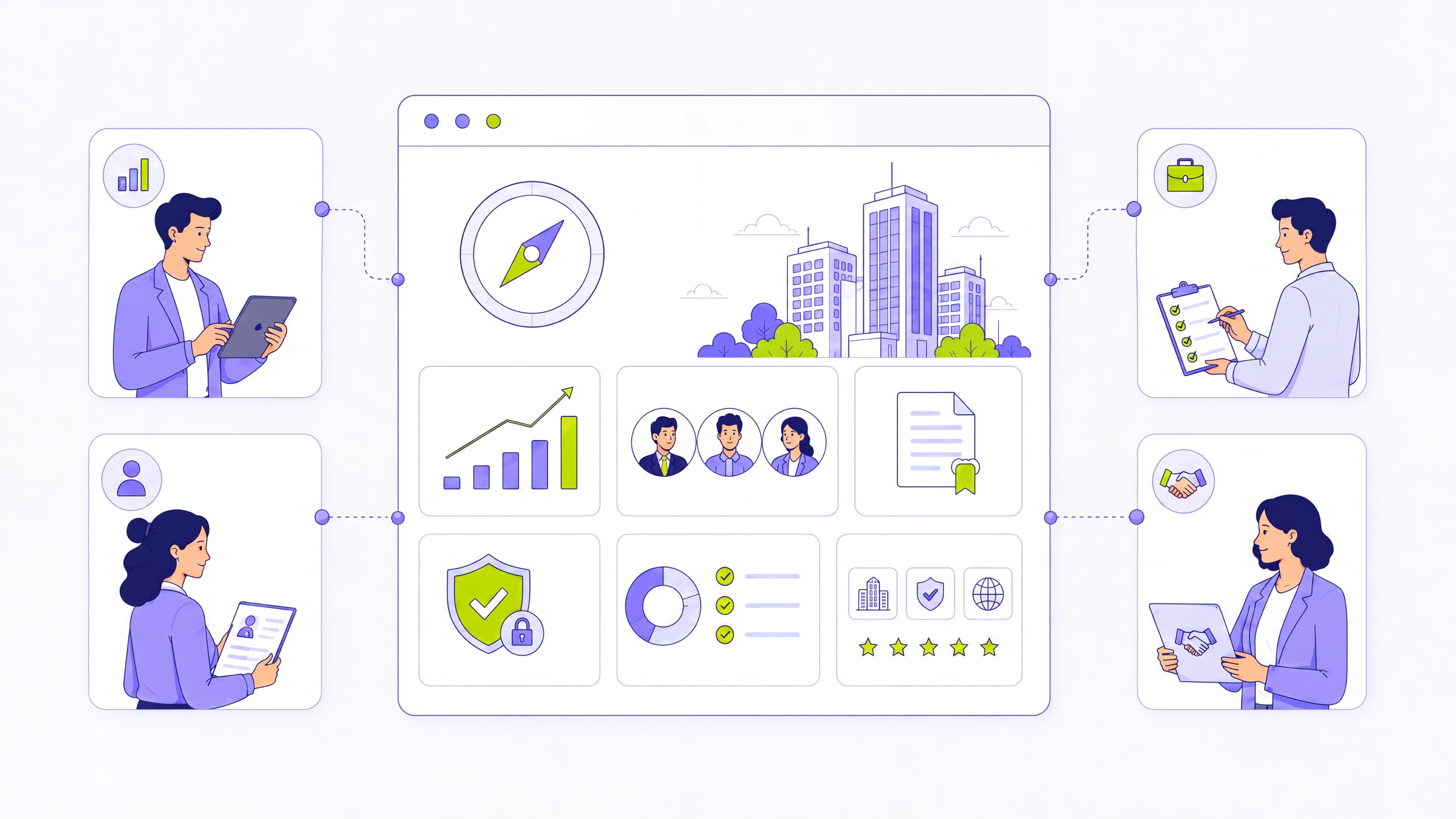
When a serious investor considers a growing company, or when an enterprise buyer starts a procurement evaluation, or when a strategic partner weighs a potential deal, they all do the same thing before they ever get on a call. They open the company's website.
Websites are how investors, enterprise buyers, senior hires, and strategic partners decide whether a company is real, capable, and worth engaging. Most founders scope their website for the buyer. Very few scope it for the audiences that land on the site before agreeing to a call. These audiences read the same website but look for very different things, and the companies that recognise this usually get more of the high-stakes conversations they want.
For growing companies, the difference shows up in commercial outcomes. Better investor conversations, faster enterprise sales cycles, stronger hiring, and more confidence from strategic partners. This piece covers the foundational trust signals, the seven strategic credibility signals, how different audiences evaluate the same site, the role of business design, and how to audit for gaps.
The short answer
Investors, enterprise buyers, senior hires, and strategic partners all look for the same underlying website trust signals. Clarity of positioning. Evidence of commercial traction. Depth of leadership. Category authority. Credibility markers. And quiet indicators of operational maturity.
Alongside these, every website also needs the foundational trust signals that build credibility with any visitor. Consistent branding, visible contact information, social proof, and a secure user experience.
Growing companies that consciously design for both layers get more high-value conversations. Growing companies that scope their website only for buyer conversion often lose the audiences that matter most.
How growing companies in India build website credibility signals for investors and buyers
Website credibility signals for companies are built by consciously designing the website for multiple high-stakes audiences at the same time. The right business design services combine positioning, brand strategy, content strategy, information architecture, and evidence design into one integrated engagement.
The best business design work for credibility-focused websites comes from partners who understand what specific evidence each audience is scanning for and design each page to surface that evidence naturally. A well-executed engagement produces a trustworthy website that reads as credible to an investor scanning it before a first meeting, to an enterprise buyer running procurement, and to a senior candidate evaluating whether to take a recruiter call. Design for business always ends in commercial outcomes. For credibility-designed websites, those show up as better investor conversations, faster enterprise sales cycles, and stronger inbound talent.
Why investors and buyers read websites differently from marketers
The failure mode most companies fall into is assuming that a website that converts marketing buyers will also work for investors, enterprise buyers, and senior hires. It usually does not.
Marketing buyers scan for value proposition, price, and quick trust markers
- They decide fast, often in seconds
Investors scan for scale signals, category leadership, and operational maturity
- They decide slowly, over multiple visits
Enterprise buyers scan for credibility, security, and process maturity
- They decide through committee, based on whether the company looks like a safe long-term partner
Senior hires scan for leadership depth, culture, and career trajectory signals
- They decide by evaluating whether the company is a place where their career will compound
A website designed only for marketing buyers optimises for one of four high-stakes audiences and underperforms on the other three. Business design engagements scope the site to serve all four simultaneously.
The foundational website trust signals every visitor evaluates
Before any high-stakes audience reads the strategic layers of a website, they scan for foundational trust signals that show the site belongs to a real business. These apply to every growing company, from small business to enterprise.
- Consistent branding across every page
- Signals design system discipline and operational maturity
- Visible contact information
- Phone number, email, physical address, and social media links
- Social proof
- Client logos, case studies, testimonials, star ratings, positive reviews from other customers
- Team photos and real photos of leadership
- Signals the company has humans behind it, not stock imagery
- Professional design and intuitive navigation
- Signals the company invested seriously in first impressions
- Transparent policies where applicable
- Refund policy, return policies, or money back guarantee for consumer and ecommerce contexts
For consumer and ecommerce businesses, additional trust badges matter. Security seals, payment icons, payment logos, verified reviews, industry certifications, and industry awards all reduce perceived risk for a first time buyer at the checkout page.
For B2B and enterprise, these matter less than the strategic credibility signals that follow.
The seven strategic website credibility signals investors and buyers actually look for
Beyond foundational trust signals, high-stakes audiences look for seven strategic signals. Companies that design for all seven get more of the high-stakes conversations they want.
Clarity of positioning
The first thing every high-stakes audience checks is whether the company can articulate what it is, who it serves, and why it is different in a single scroll.
- Position-led hero section that answers the three positioning questions immediately
- Category framing that positions the company as its own reference point
- Buyer definition that shows the company knows exactly who it serves
- Value proposition specific enough that the wrong prospects self-select out
Vague positioning is the single most common reason serious audiences bounce from a site. It signals internal confusion, which every high-stakes audience treats as a red flag.
Evidence of commercial traction
Investors, buyers, and analysts all scan for evidence that the company is producing real commercial outcomes. Vague claims fail this test. Specific numbers pass it.
- Customer logos of recognisable brands
- Case studies with specific outcomes and named clients
- Metrics that indicate scale (customer count, revenue growth, market share, retention)
- Named partnerships that signal category legitimacy
The engagement with Helios shows what commercial traction looks like when it is surfaced properly on a website. The Helios case study is here. The company scaled from 40 to 250 stores over the five-year partnership. Ecommerce sales grew 2.2x and organic traffic scaled by up to 3x.
These are the exact numbers investors and buyers scan for when they land on the site. See how the traction signals show up in the finished digital experience at Helios.
Depth of leadership
Every high-stakes audience clicks through to the team page or leadership section. What they find there shapes whether they take the next meeting.
- Founder profiles that convey ambition, experience, and category thinking
- Leadership bios that show the depth of the operational team
- Advisor and board pages where relevant, showing external validation
- Founder writing, interviews, and public thinking that position leadership as category voices
Companies that hide their leadership team, or present it in generic corporate style, lose credibility with every audience that reads leadership depth as a proxy for company depth.
Category authority
Investors and enterprise buyers evaluate whether the company is a category participant or a category leader. Websites signal this through content strategy, thought leadership, and framing choices.
- Insights, blog, or editorial section producing category-defining content
- Founder writing that shapes the category conversation
- Media coverage and analyst mentions that treat the company as a category reference point
- Case studies that read as category-defining stories, not just customer wins
Category authority signals compound. The longer a company sustains them, the more the market defaults to treating the company as a category leader.
Credibility markers that hold up under scrutiny
Enterprise buyers running procurement and investors doing due diligence look for specific credibility markers that most marketing-scoped websites miss.
- Security certifications, compliance markers, and technical audit signals for B2B and SaaS companies
- Third-party validation (press coverage, awards, industry recognition)
- Named clients with linked case studies and quotable outcomes
- Company registration details, physical address, and other markers of operational legitimacy
These signals feel unglamorous, which is why marketing-scoped websites often underinvest in them. They are exactly what audiences doing serious evaluation scan for.
Operational maturity signals
The subtlest but most important set of signals. Investors and enterprise buyers read the site for quiet indicators that the company is operationally mature, not just presentation-mature.
- Consistency across every page, indicating design system discipline
- Absence of broken links, placeholder content, or unfinished sections
- Fast page load times, especially on mobile devices
- Legal pages that read as real, not generic templates
- Careers pages that reflect actual company culture rather than boilerplate HR language
- Blog updated with recent posts, not abandoned three months ago
Operational maturity signals cost almost nothing to include and are catastrophic to omit. A website with polished marketing pages and abandoned blog content signals a company that prioritises appearance over follow-through.
Founder and leadership visibility
The final signal. Serious audiences want to see the humans behind the company, not just the brand.
- Founder page or letter that speaks in an authentic voice
- Public thinking (LinkedIn posts, interviews, essays) linked from the site
- Podcast appearances, keynotes, or category conversations the leadership has led
- Team pages that show the depth of the operation beyond the founder
Founder visibility is one of the highest-leverage credibility signals for growing companies in 2026, especially for AI answer engines that cite founder content heavily when generating responses about the company.
Why marketing-scoped websites usually miss investor and buyer signals
Marketing-scoped websites are designed for conversion, which optimises for a very different set of behaviours than credibility evaluation.
- Marketing optimises for time-on-page and click-through, not depth of scrutiny
- Marketing optimises for emotional hook, not rational validation
- Marketing optimises for single-audience clarity, not multi-audience layering
- Marketing optimises for now, not for scrutiny six months later
The result is that marketing-scoped websites often perform well on conversion metrics while quietly losing investor conversations, enterprise deals, and senior hires that the founder never even knew were considering the company.
What business design brings to website credibility that marketing alone cannot
Business design shapes the website for every audience the company needs to convince, not just the buyer. The difference shows up in five places.
- Audience system thinking
- The site is designed for investors, buyers, hires, and partners as one integrated system
- Evidence design across every page
- Credibility markers are built into the page structure rather than added as afterthoughts
- Content strategy grounded in category authority
- Content builds credibility over years, not just conversion in the current quarter
- Design consistency that signals operational maturity
- Every element of the site holds together, including on mobile devices
- Long-term stewardship
- The site is treated as an ongoing credibility asset, not a one-time deliverable
The engagement with BootLabs shows what this looks like when a website is built to hold up under investor and enterprise scrutiny from day one. The BootLabs case study is here. The company was preparing to scale globally, and the website had to signal international credibility to audiences the founder would not be in the room with.
Brand identity, positioning, design system, and website delivered as one integrated business design engagement. Visit Bootlabs to see how the integrated engagement translated into the live credibility signals.
How to audit your website for credibility signals
A structured audit for website credibility signals can usually be completed in one to two weeks and produces a clear list of gaps to close.
- List every high-stakes audience the website needs to serve
- Read the site through each audience's lens
- What is the first thing they would scan for, and does the site surface it clearly
- Score the foundational trust signals and the seven strategic credibility signals
- Identify the highest-value gaps
- Which missing signals are costing the most in high-stakes conversations
- Prioritise fixes based on audience impact
The audit is often the highest-leverage investment a growing company can make before pursuing new investor conversations, enterprise deals, or senior hires.
How much does building website credibility signals cost in India in 2026
A serious engagement to design a website around credibility signals for investors, enterprise buyers, and senior talent in India typically ranges from 15 lakhs to 60 lakhs, depending on scope.
Cost drivers include the number of high-stakes audiences the site needs to serve, the depth of content strategy and evidence design work, whether the engagement includes case study production, the seniority of the delivery team, and whether ongoing measurement and iteration support is included.
The investment is usually recovered within the first year through better investor conversations, faster enterprise sales cycles, and stronger inbound talent.
Common mistakes companies make with website credibility signals
- Scoping the website only for buyer conversion and missing investor, enterprise, and talent audiences
- Underinvesting in the leadership and team pages where every serious audience clicks first
- Hiding commercial traction data instead of surfacing it prominently
- Abandoning the blog three months after launch, signalling operational immaturity
- Using generic corporate templates for legal, careers, and about pages
- Treating case studies as sales tools rather than as credibility documents
- Using vague or anonymous testimonials instead of customer proof with full names and photos
- Not linking to founder writing, interviews, or public thinking
- Optimising for polish over evidence, which serious audiences see through immediately
Each of these produces the same outcome. A website that looks good on the surface and fails the credibility check when it matters most.
The closing signal
The high-stakes audiences that matter most to a growing company are almost never in the room with the founder when they form their first impression of the company. They form that impression alone, on the website, reading the site the way skeptical adults read contracts.
Companies that recognise this and design for it get more of the investor conversations, enterprise deals, and senior hires they want. Companies that scope their website only for marketing conversion often lose these audiences without ever knowing why.
At Mellow Designs, we work with growing companies on business design engagements that scope websites for the full range of high-stakes audiences the company needs to convince. Positioning, content strategy, evidence design, and long-term credibility stewardship as one continuous scope.




.svg)


