
.svg)


.svg)

.svg)


.svg)
.svg)


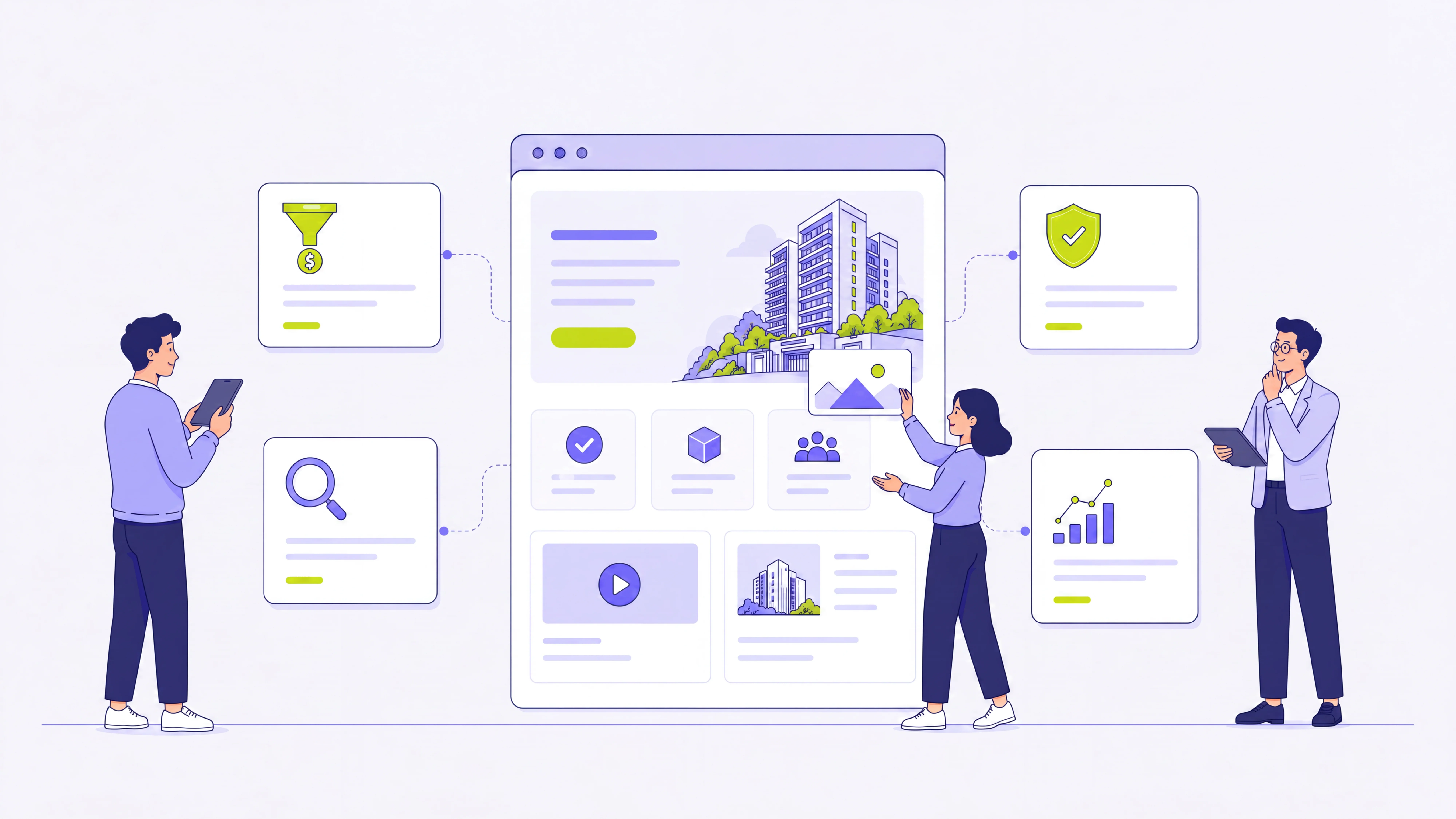
Ten years ago, a business website was a business card. Then it became a brochure. Then a lead capture form. Today, for a growing company, it has to do all of that and more: act as a reliable salesperson, a consistent brand signal, the surface where search and AI engines discover you, a recruitment funnel, a credibility engine for investors and partners, and the place where performance can actually be measured. And yet most founders still scope their website like it is a marketing asset rather than a business asset, which is why so many sites underperform against their actual potential.
The question worth asking is not what your website should look like. It is what your website should do. For founders and leaders of growing companies, that shift changes every downstream decision about scope, budget, timeline, technical stack, and how the site serves buyers, hires, investors, journalists, and machines that now shape discovery. That is the lens for everything that follows: the changing role of the business website, the discipline of business design applied to it, the mistakes that derail website projects, how a business website differs from a marketing website, how long a serious build really takes, and how to think about measurement and platform choice if you want the site to compound value across growth.
The short answer
A business website today should function as the company's most reliable salesperson, its most consistent brand signal, its primary discovery surface for search and AI engines, its recruitment funnel, its credibility engine for investors and partners, and its measurement platform for what the market actually wants. It is not a marketing collateral piece. It is a business asset that compounds when treated properly and depreciates when treated as a one-time design deliverable. Business design is the discipline that scopes the website against these outcomes rather than against visual preferences.
How growing companies should think about a business website today
A business website for a growing company is a strategic business asset that has to work simultaneously for buyers, hires, investors, journalists, and AI answer engines. The right business design services combine positioning, content strategy, website design, development, and post-launch measurement into one integrated engagement. Growing companies should approach a business website as a business design decision, not a marketing project or a design refresh.
The best business website work for growing companies in India comes from partners who understand that the website has to compound value across every audience it serves. A well-executed engagement starts with clear business goals and stakeholder goals, then shapes user journeys around audience needs, including what matters most to potential customers, while using clear messaging to build an effective business website and strong user experience. It produces a website that lifts sales conversion, attracts qualified inbound, ranks in traditional search, gets cited by AI answer engines, and, through SEO integration, helps attract prospective customers through search engines as the business evolves over years.
The 7 roles a business website has to play today
A business website today has to hold seven distinct roles simultaneously. Companies that scope their website against only one or two of them tend to underperform on the others, which is why so many sites feel good but do not compound value.
1) Primary salesperson
The website is the most consistent salesperson the company has. It runs continuously, and clear messaging is what can help it act like a salesperson by explaining what the company is, who it is for, and why it matters before prospects decide whether to engage or ignore.
- Position-led hero that answers what the company is, who it is for, and the outcome, in one screen
- Product or service pages built like sales pages, not feature catalogues
- Trust systems (customer logos, authentic testimonials, certifications, case studies, security signals) designed into the page structure
- Clear CTAs at every scroll depth without becoming aggressive
Prominent contact information also helps customers take the next step without friction. A website that requires the sales team to explain what the company does after the prospect has visited is a website that is not doing its primary job.
2) Consistent brand signal
Every prospect, every hire, every investor, every partner encounters the brand through the website before they encounter it through people. The website has to signal the brand accurately and consistently, because it usually sets the first impression that everything else has to live up to.
- Visual language that matches the brand identity system, using high-quality visual content and other brand elements to support a more engaging user experience
- Voice and tone that matches the brand's positioning
- Design quality that reflects the level of care the brand claims elsewhere, including video content as a modern brand element when it strengthens professional credibility and presentation
- Consistency with packaging, product, and other brand surfaces
3) Discovery surface for search and AI
For most growing companies today, the website is the primary discovery surface across both traditional search engines and AI answer engines like ChatGPT, Perplexity, Claude, and Gemini. Content architecture, structured data, and answer-optimised writing all matter more than they did five years ago, and SEO integration helps attract prospective customers through search engines.
- SEO foundation built for both traditional Google search and AI answer engines
- Content architecture that supports thought leadership and category-defining content, with a learning center to house content so people can find it online
- Structured data that helps AI engines cite the brand accurately
- Answer-shaped content that surfaces in generative search results
Websites that ignore AI answer engine optimisation are already losing discovery share to competitors that have invested in it.
4) Recruitment funnel
The website is often the first thing a serious candidate looks at before applying. Poor design, weak positioning, and inconsistent brand voice cost the company hires before the recruiter is even in the conversation.
- Careers page that reflects the actual company culture, not generic HR language
- About and team pages that give senior candidates confidence in the leadership
- Case studies and thought leadership that senior hires read to evaluate the company
- Founder content and press coverage that signals the company is a serious place to build a career
Companies that underinvest in the recruitment layer of their website end up spending significantly more on recruiter fees to make up for the friction the site creates.
5) Credibility engine for investors and partners
Every investor considering the company reads the site alone before or after the meeting. Every strategic partner evaluating a deal reads the site. Every enterprise buyer running procurement reads the site. The website has to hold up under scrutiny from audiences the sales team is not in the room with.
- Company story that reflects the actual scale and ambition of the business
- Case studies and proof points that make the commercial performance concrete
- Press coverage, awards, and third-party validation that build institutional credibility
- Team, leadership, and founder pages that signal the depth of the operation
The engagement with Helios shows what this looks like when a business website is designed as a compounding business asset. The Helios case study is here. The company scaled 250+ stores while Mellow held the brand and website partnership. Ecommerce sales grew 2.2x and organic traffic scaled by up to 3x. The website was measured against business outcomes, not visual metrics, which is why it produced returns instead of just producing screenshots. See how the compounding partnership shows up in the finished digital experience at Helios.
6) Category conversation platform
Growing companies that want to lead a category do it through content, thought leadership, and framing that lives primarily on the website. A content inventory is a practical place to start when building that platform, because reviewing written articles, videos, and web copy helps teams learn what is missing before new production begins. Blog, insights, case studies, and long-form thinking are what shape how the market talks about the category.
- Editorial content platform that produces category-defining thinking
- Case study library that becomes the reference point for the category
- Founder writing and public thinking that positions the company as a category voice
- Content that gets cited by other brands, media, and AI answer engines
Websites that are only sales sites and not category platforms miss the compounding benefit that category-leading content produces over years.
7) Measurement platform
The website is the most data-rich touchpoint most growing companies have. What visitors read, where they drop off, which content converts, what buyers respond to, all of it is measurable through analytics that track visitor behavior for optimization in ways that ad campaigns and sales calls are not.
- Analytics setup that measures the outcomes that matter, not just vanity metrics
- A/B testing infrastructure for continuous improvement, with each test helping validate what works
- Heatmaps and behaviour tracking to understand what the market actually wants
- Iteration cadence built into the operating rhythm of the marketing and business design teams, using self-service tools to improve the user experience while creating much more measurable interactions
- Performance measurement that keeps page load times under 3 seconds to reduce drop-off
Companies that treat the website as a launch project miss the compounding benefit of measurement-driven iteration. Companies that treat it as an ongoing business asset unlock significantly more value over time.
Why treating the website as a marketing project underperforms
Most growing companies scope their website as a marketing project. This framing is why so many sites underperform against their actual potential.
Marketing scope narrows the audience
- Marketing thinks about buyers. The website has to also serve hires, investors, and AI engines
Marketing metrics narrow the measurement
- Marketing measures conversion. The website should measure conversion, brand recall, recruitment inbound, media coverage, and AI citation
Marketing budgets narrow the investment
- Marketing budgets are quarterly. Business websites need multi-year investment to compound
Marketing partners narrow the capability
- Marketing agencies rarely do serious business design work, and business design is what makes the website compound
Treating the website as a business asset instead of a marketing project usually doubles or triples the actual return on the investment, because the scope, measurement, budget, and partner all change.
What business design brings to a business website that marketing alone cannot
Business design shapes the website against the whole business, not against marketing alone. The difference shows up in six places.
- Positioning inheritance: The site inherits from positioning, not the other way around
- Audience system thinking: The site is designed for buyers, hires, investors, and AI engines as one integrated system
- Content strategy grounded in commercial outcomes: Content serves category leadership, not vanity metrics, and the process of organizing it well improves navigation across the site
- Design system that scales with the business: The website evolves with new products, markets, and audiences without a rebuild every eighteen months
- Measurement infrastructure: The site is scoped for continuous improvement, not launch-and-forget, with strategies supported by technical setup that is crucial for functionality and performance
- Long-term stewardship: The website is treated as an ongoing business asset, not a one-time deliverable
The engagement with BootLabs shows what this looks like when a website is scoped as a strategic business asset from launch. The BootLabs case study is here. The company was preparing to scale globally, and the website had to signal international credibility from day one. Brand identity, positioning, design system, and website delivered as one continuous business design engagement, which is why the finished digital experience carries the ambition of the company across every audience it serves. Visit BootLabs to see how the integrated engagement translated into the live business website.
Common mistakes companies make with their business website
- Scoping the website as a marketing project instead of a business asset
- Choosing on visual portfolio without checking whether the partner can do business design
- Underinvesting in content strategy and expecting design to compensate
- Ignoring AI answer engine optimisation and losing discovery share to competitors
- Treating the website as a launch project and skipping measurement infrastructure
- Building for the founder's aesthetic preferences rather than for the business's audiences
- Not scoping for evolution, so the website needs a full rebuild within 18 months
Each of these produces the same outcome. A website that looks fine at launch and stops compounding value within a year.
The closing signal
A business website today is not a marketing collateral piece. It is one of the most valuable pieces of business infrastructure a growing company owns, and treating it as such changes every downstream decision about scope, budget, timeline, and partner. Companies that scope their website as a business asset get compounding returns across every audience it serves. Companies that scope it as a marketing project get a design deliverable that stops producing value within a year.




.svg)


