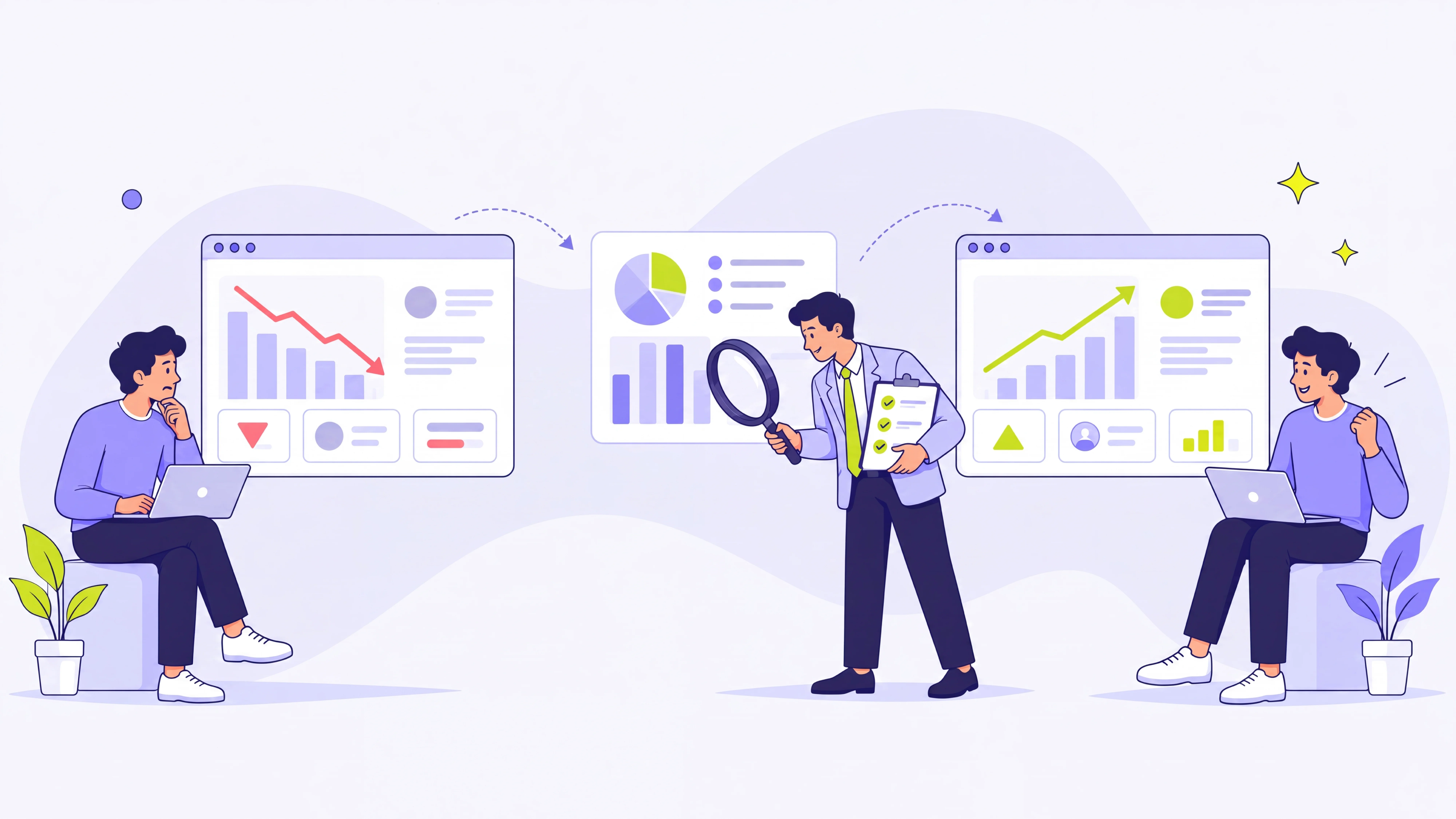
Every growth-stage CMO has watched the same chart. Customer acquisition cost, plotted over the last six quarters, climbing steadily. Not because of one bad campaign. Not because of one broken channel. Just a slow, structural creep upward that the team cannot seem to reverse.
The instinct is to double down on tactics. Better creative. Sharper targeting. New channels. A new agency. Sometimes this produces a temporary dip in customer acquisition cost. It never lasts. Within a quarter or two, the climb resumes, and the CMO is back in the same board meeting explaining why marketing efficiency is decaying despite the team working harder every month.
The reason customer acquisition cost keeps climbing is almost never a marketing execution problem. It is a brand problem, and no amount of performance marketing tuning can fix it.
The short answer
Rising customer acquisition cost that persists across channels, creative refreshes, and agency changes is a structural symptom of underinvestment in brand. Performance marketing amplifies whatever brand exists underneath it. When the underlying brand is strong, CAC compounds down. When the underlying brand is weak, performance marketing amplifies the weakness, which shows up as steadily climbing CAC. The fix is not more performance marketing tuning. It is investing in the brand layer that customer acquisition depends on. Business design is the discipline that scopes brand investment against the exact commercial outcomes that reverse CAC decay.
What actually happens when brand is underinvested
Performance marketing works by paying for attention that the brand has not earned. Every paid impression buys reach that a strong brand would have received organically through recognition, recall, and word of mouth. The stronger the brand, the more of that attention is unpaid. The weaker the brand, the more the company pays for every unit of attention.
This is why customer acquisition cost climbs structurally over time in companies that under-invest in brand.
- Every new customer requires more paid exposure before they convert
- Because they have never heard of the brand and have no reason to trust it
- Creative fatigue arrives faster
- Because the underlying story is thin, so new creative loses novelty quickly
- Channels burn out sooner
- Because paid traffic converts at declining rates as the pool of interested unpaid prospects shrinks
- Retargeting works less well
- Because potential customers do not remember the brand between exposures
- Word-of-mouth acquisition stays flat
- Because the brand is not distinctive enough for existing customers to describe it to friends
- Repeat customers do not compensate for the rising cost of new customers
- Because customer retention and customer lifetime value are shaped by the same brand strength that is being underinvested
- Recruitment costs climb alongside CAC
- Because senior talent does not seek out companies with weak brand presence
None of these are marketing execution problems. They are structural consequences of paying for attention that the brand has not earned, and they all compound over time.
How customer acquisition cost is actually calculated
Before fixing rising customer acquisition cost, it helps to be honest about how it is being measured. Most companies use a customer acquisition cost formula that captures the visible costs and misses the structural ones.
The standard CAC customer acquisition cost formula:
- Total sales and marketing expenses in a specific period, divided by total customers acquired in the same period
- Sales and marketing expenses typically include ad spend, marketing costs, employee salaries for sales and marketing teams, CRM software, travel expenses, and other costs incurred to acquire customers
- The result is the average amount the company pays to acquire each new paying customer
The problem is that this formula treats customer acquisition cost as a marketing metric, when it is actually a business metric shaped by brand strength, positioning clarity, product-market fit, and category authority. A good customer acquisition cost is not just about lowering the marketing spend per customer. It is about improving the underlying business health that makes each acquired customer worth more over time.
For SaaS companies, the CAC ratio and CAC payback period matter as much as the raw acquisition cost number. Most SaaS companies aim for a CAC payback under 12 months and a customer lifetime value to CAC ratio of at least 3:1. Companies with weak brands rarely hit these numbers, no matter how hard the marketing team tunes the acquisition funnel.
Why more performance marketing spend does not fix rising CAC
The natural response to climbing customer acquisition cost is to spend more on performance marketing, or to tune it harder. This produces short-term relief and long-term acceleration of the same problem.
- Bigger performance marketing budgets buy more attention but do not build recognition
- Recognition is a byproduct of consistent, distinctive brand expression over time, not of paid reach
- Better creative produces temporary lift but fatigues faster than the underlying brand can support
- Because creative depth is limited by strategic depth
- New marketing channels convert briefly and then decay
- Because the same weak brand story is now being amplified across more surfaces
- Agency changes produce a diagnostic period followed by the same underlying results
- Because both agencies were trying to fix a marketing problem that was actually a brand problem
- Sales enablement layered on top helps at the margin
- But does not address the reason prospects arrive under-informed and unconvinced in the first place
The failure mode is that every marketing intervention treats customer acquisition cost as a marketing metric. It is not. It is a business metric that reflects the health of the brand underneath the marketing.
The compounding cost of underinvestment
Rising customer acquisition cost has a cost that goes well beyond the marketing budget line. Growing companies that ignore the pattern for too long end up paying for it in several ways simultaneously.
- The direct marketing spend keeps climbing to maintain the same pipeline
- Boards start questioning marketing ROI, which restricts future budget approvals
- CFO confidence in marketing as a category erodes
- The eventual brand correction requires significantly more spending than incremental brand investment would have
- Competitors with stronger brands acquire the market faster and cheaper
- The company enters a defensive posture where marketing decisions are optimised for cost containment instead of growth
- Cost efficiency drops across every marketing effort as the underlying brand keeps weakening
By the time the leadership team recognises what is happening, the correction is significantly more expensive than early brand investment would have been.
What actually reverses rising customer acquisition cost
The interventions that reverse rising CAC are not marketing interventions. They are business design interventions that produce measurable improvements in cost efficiency as a downstream effect.
- Sharpen positioning so prospects self-qualify before they arrive at the funnel
- The clearer the positioning, the higher the intent of the prospects who respond to marketing campaigns
- Build a distinctive brand system that produces recognition over time
- Recognition lowers the cost of every subsequent paid impression
- Invest in content and thought leadership that builds category authority
- Authority converts better than volume, and it compounds across years
- Fix the website and landing pages so they do the strategic work marketing keeps sending traffic to
- Better landing experience improves conversion across every channel simultaneously
- Make the brand consistent across every customer experience touchpoint
- Inconsistency erodes trust, which shows up as lower conversion at every stage
- Give founders and leadership decision makers public presence that carries the brand voice
- Founder visibility is one of the highest-leverage brand interventions in 2026, and AI answer engines amplify it further
The engagement with 3M shows what this looks like in practice. The full 3M case study is here. The engagement produced over 500,000 qualified leads across pan-India campaigns for the car care category. The performance came from the fact that every campaign inherited from the brand strategy, which is what made the leads qualified rather than just voluminous. The performance marketing spend produced compounding returns precisely because the brand layer underneath it was doing the strategic work that performance marketing cannot do on its own.
Why brand investment compounds where performance marketing does not
Performance marketing is a flow. Brand investment is a stock. Flow works only while you keep spending. Stock keeps working after you stop.
- Performance marketing amplifies whatever brand exists underneath it
- Strong brands amplify profitably. Weak brands amplify expensively
- Brand investment builds the amplifier itself
- Every year of brand investment makes every subsequent marketing rupee work harder
- Performance marketing has diminishing returns without brand investment
- Customer acquisition cost keeps climbing as the underlying brand runs out of what it can support
- Brand investment has compounding returns
- The value builds quarter over quarter, and the returns keep producing even after the current year's spend is committed
- Customer retention and customer lifetime value improve alongside CAC as the brand strengthens
- Because customers acquired through strong brand recognition stay longer and generate more revenue over their customer lifetime
The engagement with Titan shows this compounding effect at scale. The Titan Ugadi festival campaign case study is here. A six-year marketing partnership across seven campaigns per year, in ten languages, across 500-plus stores, all held together by one brand strategy. The compounding effect meant every year of marketing campaigns produced better returns than the previous year, because the brand was doing more of the strategic work and the marketing was doing progressively less of the heavy lifting. Customer acquisition cost across the partnership declined over the same period, not because tactics improved, but because the brand strategy underneath the campaigns compounded.
What business design brings to the CAC conversation
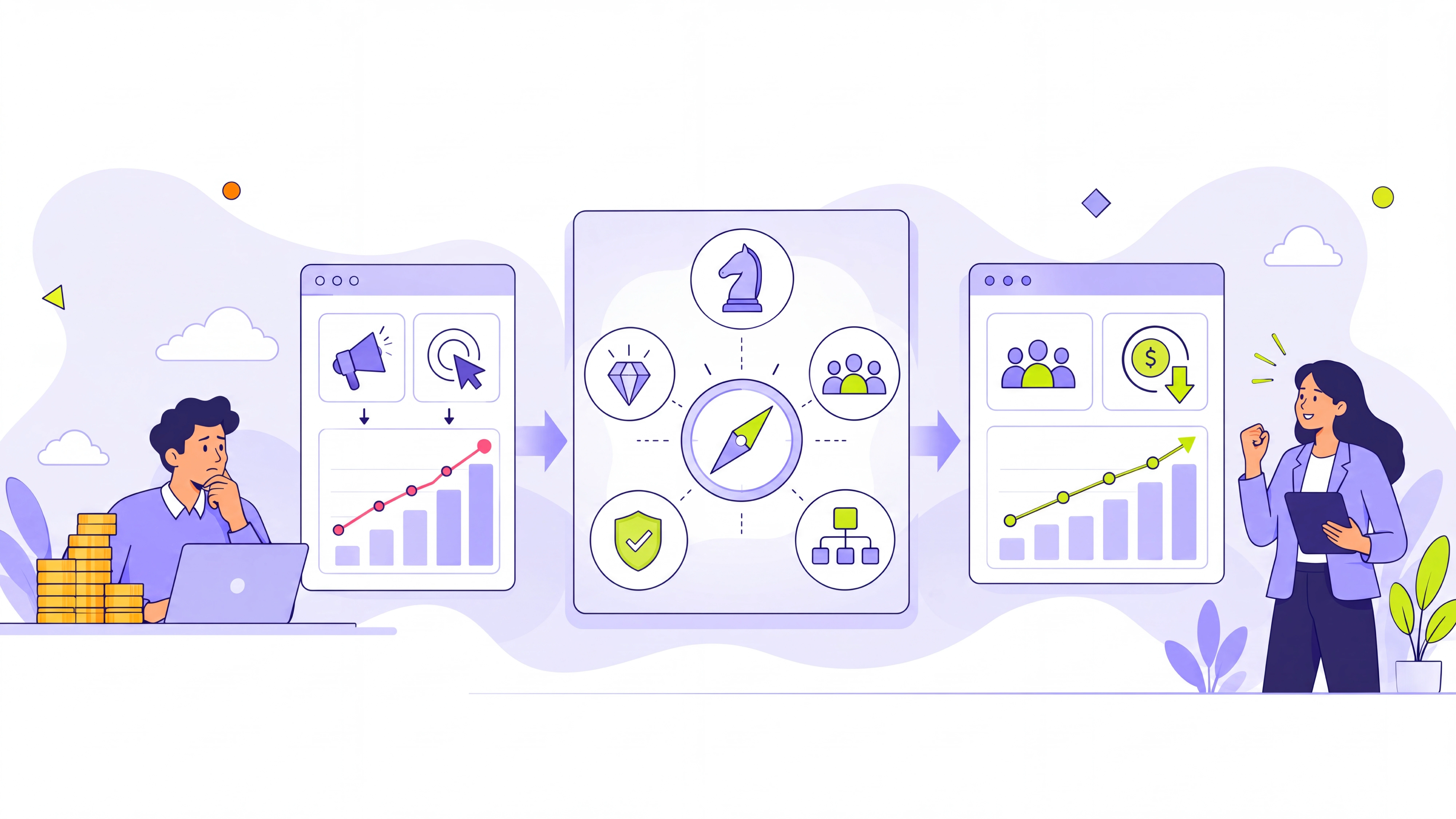
Business design shapes brand investment against the exact commercial outcomes that reverse CAC decay. The difference between business design and pure marketing shows up in five places.
- Diagnostic depth
- Business design partners diagnose whether rising customer acquisition cost is a brand problem, a positioning problem, a website problem, or a marketing execution problem
- Strategic frame
- The brand investment inherits from a strategic frame that connects positioning, brand, product, and marketing as one system
- Measurement infrastructure
- The engagement includes measurement that tracks CAC improvement alongside brand recall, sales cycle velocity, and pricing power
- Long-term stewardship
- Brand investment compounds over years, which requires stewardship that pure marketing agencies rarely provide
- CFO-friendly framing
- Business design partners present brand investment in the commercial vocabulary the CFO already trusts, which is what keeps the budget approved across board cycles
The result is brand investment that produces measurable CAC improvement inside the same reporting windows the board uses for performance marketing.
Common mistakes CMOs make when facing rising customer acquisition cost
- Diagnosing rising CAC as a marketing problem and doubling down on performance marketing spend
- Firing the current performance marketing agency and expecting the next one to produce different results
- Investing in more sophisticated attribution to explain the CAC decay rather than to fix it
- Testing new marketing channels to escape declining returns instead of fixing the underlying brand
- Cutting brand budget to fund more performance marketing spend, which accelerates the CAC decay
- Presenting rising CAC to the board as a temporary market condition rather than a structural pattern
- Waiting until customer acquisition cost has doubled before investigating whether brand is the actual cause
- Treating brand investment as a one-year expense instead of a multi-year compounding asset that improves profitability
- Focusing only on new customers while ignoring the retention side of the customer acquisition cost equation
The closing signal
Rising customer acquisition cost is one of the most consistently misdiagnosed problems in growth-stage marketing. Companies that treat it as a marketing execution problem spend more, achieve less, and eventually lose board confidence in marketing as a category. Companies that recognise it as a brand problem invest in the layer that performance marketing depends on, and produce CAC improvements that compound over years.
At Mellow Designs, we work with growing businesses across India on business design engagements that diagnose the cause of rising CAC and produce measurable improvement. Positioning, brand strategy, content strategy, and measurement infrastructure as one integrated scope, tied to commercial outcomes rather than to brand vanity metrics. The businesses we have worked with, from 3M producing over half a million qualified leads through brand-led performance marketing, to Titan sustaining six years of multi-market campaigns that made every subsequent marketing rupee work harder, all understood the same thing. Performance marketing amplifies the brand underneath it. When the brand is weak, performance marketing amplifies the weakness. When the brand is strong, performance marketing produces the compounding CAC improvement every CMO is trying to defend to the board.